Saturday, December 23, 2017

A Fred Astaire Double Feature

I have a couple of recommendations for you if you're up for watching two classics that star a true icon from the Golden Age of Hollywood.  Fred Astaire was the epitome of poetry in motion in his classic movie musicals.  Several of his best were original movie musicals.  He danced, acted, choreographed and sang.  He introduced songs that are now part of our Great American Songbook.  Some are "Cheek to Cheek," "Pick Yourself Up," "The Way You Look Tonight," "Let's Call the Whole Thing Off," "One For My Baby," and "Something's Gotta Give."  Fred Astaire did extremely complicated, physically taxing and artistically challenging work.  He made that work -- his dance numbers -- look so easy that the Academy probably didn't realize how grueling it was.  Have you ever danced to an upbeat tune in a tuxedo at a party or a wedding reception?  You broke a bit of a sweat, didn't you?  Fred Astaire danced to fast tempos (look at his title tune number in 1935's TOP HAT with an original score by Irving Berlin), he lifted and twirled Ginger Rogers and he advanced the emotions of the scene in a tuxedo.  He advanced the art of the screen musical.  However, he never received an Oscar nomination for his work in a musical.  Why?  Because they were musical comedies and traditionally, for some reason, the Academy gives Oscars to performers to either die or cry ... or both ... in a musical with a severe heartbreak.  Yul Brynner in THE KING AND I (the king dies), George Chakiris in WEST SIDE STORY (the gang leader dies), Rita Moreno in WEST SIDE STORY (the gang leader's girlfriend cries after his tragic death), Barbra Streisand in FUNNY GIRL (Fanny Brice cries while singing "My Man" at the end because her husband wants  divorce), Anne Hathaway in LES MISERABLES (her character sings, cries and dies).  There are exceptions -- like Julie Andrews as MARY POPPINS and Rex Harrison in MY FAIR LADY.  In 1953, Fred Astaire delivered one of his finest screen performances in Vincente Minnelli's big gem of a movie musical comedy called THE BAND WAGON.
Here is Astaire playing a veteran Hollywood song and dance man who hasn't had a hit film in a few years.  Like Astaire, Tony Hunter's trademarks starting in the 1930s were a top hat, white tie and tails.  Now he has an offer to reinvent himself in a Broadway musical with numbers that will have a contemporary jazz beat.  He's insecure about his talents. relevance and height.  He starts to bicker with his gorgeous leading lady, a rising ballet star who appears to be a little taller than he is.  And she's years younger.  Fred Astaire and Cyd Charisse are magical in THE BAND WAGON.  Their dancing together is the stuff of Heaven.
Astaire not only artistically challenged himself with a new style of jazz choreography in the celebrated finale, the complicated but fabulous choreography by Broadway's athletic Michael Kidd, Astaire also disrupted aging.  He made this musical when he was in his early 50s.
If Fred Astaire had ever received a Best Actor Oscar nomination for one of his musicals, it should have been for THE BAND WAGON.  He received an Honorary Oscar from the Academy in 1950. His one Oscar nomination came in the Best Supporting Actor category for 1974's THE TOWERING INFERNO.  In that all-star big box office champ of a disaster movie, he wore a tux and got really dirty as one of the high rise fire survivors.  For a few seconds in a gala dance floor party scene, he dances with Jennifer Jones.  The cast also included William Holden, Paul Newman, Steve McQueen, Faye Dunaway and O.J. Simpson.

That dramatic role as a classy con man was no where near as challenging or as well-written as his part in THE BAND WAGON...but there you have it.  Astaire simply made the dancing/acting art look too easy, I guess.  Here's the famous "Dancing in the Dark" number from THE BAND WAGON.  The two bickering artists have settled their differences and found a common rhythm while strolling through Central Park.
In the first 10 minutes of THE BAND WAGON, as the aging Hollywood star on a train to New York City, he arrives and thinks some press members have gathered to meet him at the train station and get a quick interview.  Wrong.  Ava Gardner, his pal, is one the same train and she's who the press guys want to see.  Astaire and Ava Gardner, in her cameo, have a brief scene together.
Fred Astaire's first dramatic role should have brought him a Best Supporting Actor Oscar nomination.  He's quite effective in a tough social commentary film.  1959's ON THE BEACH is a plea to post World War II mankind to stop the proliferation of nuclear weapons.  In the film, World War III has ended but the earth's atmosphere has been polluted with nuclear fallout.  There is no cure for the radiation sickness.  Populations of whole cities in various parts of the world will die in this apocalyptic tale.  Astaire plays a scientist named Julian Osborne.  He helped advance atomic power, never dreaming that mankind could do itself in with it.  Julian is brilliant and lonely.  There's no one special in his life as the crisis expands.  He has several scenes in ON THE BEACH with Ava Gardner as Moira, the beautiful mature woman who's survived a series of unfulfilling affairs with men.  She will find true love, at last, from Gregory Peck's character.  He plays the captain of the submarine that Julian's on as they head to Australia to test for fallout.
Astaire has some strong, good scenes with Ava Gardner, Gregory Peck and Anthony Perkins in this one.  You get the feeling that the performer personally agreed with Stanley Kramer's cautionary atomic age message.

There you have it.  Fred Astaire with Ava Gardner in two of his best films -- films that didn't but should have brought him Oscar consideration.  See for yourself in 1959's ON THE BEACH and in the terrific 1953 classic musical, THE BAND WAGON.

Friday, December 22, 2017

College Mirth and Madeline Kahn

Man, how I miss Madeline Kahn.  No screen actress since Mae West in the 1930s had made sex so openly fun and funny.  The late Madeline Kahn lit up every movie she appeared in during the 1970s with her comedy brilliance.  And she was lovable.  You just wanted to go into the screen scene and hug her.
There was a Marquette University professor whose classes I could not wait to attend every time.  And they were long classes, lasting about three hours.  They opened with a lecture from James Arnold, a slim and long-haired, bespectacled professor in the Journalism Department and they concluded with...a film.  He taught Film as Journalism.  Did you ever see SPELLBOUND, the 1940s Alfred Hitchcock classic starring Ingrid Bergman as a bookish psychoanalyst and Gregory Peck as her handsome new co-worker?  If you did, I'm sure you recall the famous kissing scene.  She puts down her book, removes her glasses and he kisses her.  We see a series of doors opening in her mind, one after another, to illustrated her new...enlightenment.  That's how I felt listening to Professor Arnold's lectures.  He loved films.  He taught us how to read the literature of films while watching them.  He taught us about the details of special visual effects, like that kissing scene.  He taught us about special audio effects, lighting, shadows, camera blocking, the placement of actors, music scoring...all those things that add to watch the director is saying in the film.  Those things all make up the literature of it.  Professor Arnold explained that Vincente Minnelli's THE CLOCK starring Judy Garland and Robert Walker (which he showed to the large class) and MIDNIGHT COWBOY had a connection.  In the World War II love story of 1945's THE CLOCK, we see the soldier and the lonely secretary who fall in love in Manhattan.
What's the connection to a male hustler and a low-life con man in 1960s Manhattan?  Professor Arnold told us that, in both films, New York City is like the third character.  It brings the two lead characters together, separates them and then reunites them.  THE CLOCK did have something in common with 1969's MIDNIGHT COWBOY.
I went into his university class with a love of film that had started when I was in elementary school.  He made my love burn hotter and brighter.  I did so well in his class that I got an A exemption.  I didn't have the take the final exam.

At that time, well into the 1970s, you were not a serious film enthusiast if you didn't mention and go see the movies of Ingmar Bergman.  He was talked about with a  reverence.  Professor Arnold lectured on the theo-philosophical depth and symbolism of Ingmar Bergman films.  He screened Bergman's 1958 classic, THE SEVENTH SEAL.
In our textbooks, we read about Bergman's WILD STRAWBERRIES.

In the next class, Professor Arnold talked about comedy and short subjects.  When I was a kid, you often got a short subject in between a theater's double feature (back in the day, you paid one ticket price for two movies) and short features often preceded exclusive engagement films.

Professor Arnold screened a short feature, a parody of those Swedish Ingmar Bergman classics.  It was called De Düva: THE DOVE.

The large lecture hall class howled with laughter at this short feature.  And a few students said, "Hey! There's that girl from BLAZING SADDLES!"  The 1974 Mel Brooks comedy was out and very popular.  The girl playing Sigfrid in this 1968 comedy short was unknown to movie audiences then.  Her name -- Madeline Kahn.  You want to see THE DOVE?  Click onto this link:

https://youtu.be/c3JEIQk4mZQ.

For you Broadway fans, the actor playing the lead character, Viktor, was George Coe.  Coe was in the original Broadway cast of Stephen Sondheim's COMPANY with Elaine Stritch and Dean Jones.

In WHAT'S UP, DOC?, her big feature film intro, from director Peter Bogdanovich in 1972....
...his under-appreciated 1973 comedy/road movie PAPER MOON....
 ....and Mel Brooks' fabulous satire BLAZING SADDLES....
...Madeline Kahn displayed Oscar-nominated talents that made millions of us grieve when cancer took her away from us in 1999 at age 57.

She left us with a lot of laughs.

Tuesday, December 19, 2017

Time for SUNDAYS AND CYBELE

This was a watershed year of women coming forth with their accusations of sexual misconduct.  These women were the objects of twisted sexual desire from men in the Hollywood and network TV industry.  In the revelations and details of the allegations against Hollywood heavyweights like Harvey Weinstein and extremely well-paid network TV heavyweights like Matt Lauer, there seemed to be a running theme of power and privilege over someone of less power who was in need of employment and afraid to report having been mistreated and disrespected.  So...I want to recommend a classic film to watch over the Christmas holidays.  It's an award-winning foreign film in which a young man who was in a position of military power will go to any length to make a younger female in his life feel safe and secure.  Their relationship is precious and innocent.  This 1962 film is called SUNDAYS AND CYBELE.
This is a movie that's rarely talked about today but it was quite popular when it was released.  It should be rediscovered.  It lingers in your heart and mind after you've seen it.  SUNDAYS AND CYBELE stars Hardy Kruger, a multi-lingual German hunk of an actor.  Kruger had talent and movie star looks that made him very popular in Germany.  Soon, Great Britain and Hollywood took notice.  He starred in the version of 1953's THE MOON IS BLUE made for Germany.  For Hollywood, Hardy starred in HATARI! with John Wayne (1962) and THE FLIGHT OF THE PHOENIX (1965) with James Stewart.

In SUNDAYS AND CYBELE, Kruger is at his best.  He projects the emotional disability and spiritual tenderness of the character in a subdued, effective performance.  A fighter pilot in the Vietnam war, a Vietnamese girl was killed when his plane crashed.  He returns to France almost zombie-like.  The veteran suffers from Post Traumatic Stress Disorder. In therapy, he now moves through life like harmless ghost.  The war left its scars on his mind.
One day he sees an emotionally abusive father dumping his little girl off at a boarding school as if she's a sack of soiled laundry.  He sees her heartbreak and offers the lonely youngster help.             
He poses as her father and makes plans to visit her every Sunday.  She loves the plan.  She's a sweet girl with soulful eyes that catch your attention.  Patricia Gozzi plays Cybele so wonderfully, with such radiance, that you'll be disappointed to learn she made only two big screen movies after this one.  Her choice. Our loss.  The movie camera adored her face and she was a natural actress.
As the friendship progresses, Cybele has a very therapeutic effect on Pierre, the war veteran.  He starts to come alive again thanks to her friendship.  He's less a zombie.  Cybele is healing his wounded spirit.  She wants them to spend Christmas together in the woods.
Conservative society interferes as he tries to bring Cybele a special gift from a church near where they met.
SUNDAYS AND CYBELE.  Directed by Serge Bourguignon, it won the Oscar for Best Foreign Film.  I highly recommend seeing it if you're up for something different and mature for Christmastime viewing.  The two lead actors work together beautifully.  Your heart will be touched.  SUNDAYS AND CYBELE.  What a tender, memorable film.  Merry Christmas.

Monday, December 18, 2017

Those Who Left Us

We have reached that time of the year where we see In Memoriam shows and video features appearing on television.  TCM (Turner Classic Movies) has a poignant video, beautifully done, that is now airing.  It's a montage of film and film-related artists who passed away this year.  The touchstone TCM host, Robert Osborne is shown at the end of the video.  He left us too.  In the TCM package, I see people whose work not only moved me, entertained me and enlightened me, I see a few artists with whom I had personal contact.  They were celebrities I interviewed on TV.  In the case of Mary Tyler Moore, I not only interviewed her, I chatted with her on the phone a few times during my VH1 years.  In fact, when new management came in and took over VH1. it decided not to renew my 5-year contract at the end of its 3rd year.  So, I started seeking a new job while in the final months of that VH1 job I loved so much -- especially when the old management was in place.  I had no idea that I would be eligible for unemployment until Mary Tyler Moore told me so over the phone.  She'd heard from her production partner, a buddy of mine, that new management wasn't renewing any VH1 talent. Imagine that.  I learned that I could apply for unemployment in my TV career from "Mary Richards" herself when I returned a call to her production partner and she answered the phone.
The TCM feature has three actors who were fabulous and memorable guests on my VH1 talk show -- the hysterically funny, wise and mothering Debbie Reynolds, the warm and chatty Martin Landau and the charming and huggable Adam West.  We taped the Adam West interview in L.A.  Earlier that day, we'd interviewed his former BATMAN co-star, Burt "Robin" Ward in his Century City office.  The most heartwarming element of that taping day was the discovering that, after all those years, those two former TV co-stars were essentially a couple for old working class buddies who'd kept in touch and loved being in each other's world.
Robin Roberts presents her network special looking back at those who left us.  It airs tonight on ABC.  Her special, like the TCM video package, will show the late Glen Campbell.
Ten of the happiest days of my life in 2006 were spent in Chicago.  I had host work for every day of the Windy City's "Tastes of Chicago" festival that, back then, started in late June and went through the 4th of July.  The weather was great and so were the people sharing the booth with me.  I loved that gig.  I had booked it because I still had some popularity as a Food Network show host.  While at the Chicago event, I was asked if I would introduced the musical guest at one of the event's other stages.  I was asked because the representative remembered my VH1 work and so would members of the audience. He said that the crowd would be mostly baby boomers, and he was positive I would know something about the artist and wouldn't need a lot of biographical info.

He was right.  The artist was singer/musician Glen Campbell.

I'm not what you'd call a typical country music fan, but there are quite a few country recordings and stars that thrill me going back to classics by Patsy Cline and Hank Williams to Garth Brooks.  I believe that Dolly Parton is one of the most brilliant songwriters alive today and her work has earned its place in the Great American Songbook.

Glen Campbell singing and playing "Wichita Lineman" is a work of art in my book.  "Gentle On My Mind" and "Rhinestone Cowboy" by Glen Campbell were also cuts I loved.  And, yes, I watched his CBS variety show just about every Sunday night it was on when I was a kid.

I did not get to meet Glen Campbell backstage.  But, for a brief moment, he stood next to me as he took his place at the microphone onstage.  I stood a few feet away and watched his act.  Wow.

He walked out with a look of total focus and concentration as he made his way to the microphone, his guitar strapped around him.  I'd given him an enthusiastic intro and the crowd was a joy.  We baby boomers gave him a loud, cheerful welcome.

He warmly greeted the crowd and launched right into his signature tunes.  There was no laziness about his vocals.  He performed all his old hits as if they were making a debut on a new album of his.  And his voice was rich.  He sounded so good, so much like he did on his old CBS show.  This was 2006.

On Netflix this year, I watched GLEN CAMPBELL...I'LL BE ME.  This 2014 documentary shows the entertainer being tested for and diagnosed with Alzheimer's disease.  He begins a farewell tour in the documentary.  Honestly, some parts were tough to watch.  You see him almost in a carefree state when he's being tested and we see that his memory has started to crack. Later, we see moments when he's mean and irritable with loved ones because the disease's destruction has spread within him.  The documentary is moving yet also jarring.

I am so lucky I had that sunny Chicago afternoon experience of seeing him perform in person before illness struck.  What a performer.  And I'm lucky I had that VH1 talk show.  Here's to all those who left us with great memories -- and great art.

Thursday, December 14, 2017

Notes from Alice Faye and Don Ameche

If you're a fan of the late, great queen of Broadway...that legendary belter, Ethel Merman, then be sure to watch Turner Classic Movies tonight.  You will see "The Merm" early in her career when her Broadway success made Hollywood take notice and put her in front of the cameras in the 1930s.  She was a babe who could belt out a tune and just about drown out the orchestra.  She's a supporting player tonight in my favorite Don Ameche musical.  Yes, Don Ameche.  I loved Don Ameche.  If you only know him from COCOON, the 1985 fantasy/comedy that brought him an Oscar for Best Supporting Actor, and TRADING PLACES with Eddie Murphy, catch tonight's TCM presentation of ALEXANDER'S RAGTIME BAND.  It airs at 10p Eastern.  Don Ameche had an excellent singing voice.  Don Ameche was an excellent all-around actor.  This 1938 Fox feature earned itself a Best Picture Oscar nomination along with five other nominations.  It's an Irving Berlin catalogue musical.  That means all the songs in it were written by Irving Berlin.  ALEXANDER'S RAGTIME BAND was tailor-made for its popular stars, Alice Faye and Tyrone Power.
Berlin seems to have a pretty savvy businessman with Hollywood.  Whenever it made an Irving Berlin catalogue musical -- like 1942's HOLIDAY INN with Fred Astaire and Bing Crosby or 1948's EASTER PARADE with Fred Astaire and Judy Garland -- hits from the Irving Berlin songbook would be performed and Irving Berlin would write a couple of new songs for the production.  He did that with HOLIDAY INN.  He wrote Bing Crosby a new song called "White Christmas" and Berlin won the Oscar for Best Song of 1942.  He also gave Bing a hit song that made history in the record industry with its outstanding sales.  (Bing went on to sing it again in two other Irving Berlin catalogue musicals -- 1946's BLUES SKIES and 1954's WHITE CHRISTMAS.)  Here's the composer at the piano with Alice Faye, Tyrone Power and Don Ameche.
In ALEXANDER'S RAGTIME BAND, Don Ameche introduces a tasty new Irving Berlin love song called "Now It Can Be Told."  It gets a sweet reprise later done by the film's leading lady, Alice Faye. Maybe she didn't have the impressive acting chops of fellow singer Judy Garland, but her lush and lovely voice coupled with her glamorous looks and warm personality to match made her a Fox star.
 This is one of the Fox films that paired Alice Faye with the equally gorgeous Tyrone Power.
He plays Alexander.  He has a band.  The action starts in about 1915.  Alice plays a singer who's got a great voice but she's not at all refined.  He brings out the best in her voice.  They bicker but, musically, they're made for each other.  He's too refined and she teaches him how to make his highbrow music more accessible.  Don Ameche and Jack Haley play two guys in Alexander's band.  Of course, the two bickering characters become sweethearts and then break up before the happy ending.  During the break up, the band needs a new girl singer.  Enter Ethel.  Before she speaks one word of dialogue, she hits a note.  A loud note.
In true Golden Age Hollywood fashion, the story covers about 20 years...years that include World War I.  But none of the characters appears to age.  They look as young and fresh at the end as they did at the beginning.
Ethel gets a medley that I absolutely love and she gets outfits that flatter her babe figure.  In the film's final number, she gets to belt out "Heat Wave," an Irving Berlin hit introduced on Broadway by another Ethel -- Ethel Waters.
Here's why I continually give thanks for the career opportunities I've had while I seek new ones.  When I was new to New York City in the mid 1980s, hired by WPIX/Channel 11, I interviewed Alice Faye.  She was doing a special appearance at the time.  Oscar nominations had been announced and a friend of hers was a nominee.  We were taping the interview, but there was technical problem with the camera that had to be fixed.  Alice Faye and I retreated to a nearby room for 20 minutes and chatted like we were old buddies.  What kicked it off was my singing one of her old hits to her.  She said, "Kid, how do you know that song?!?!"  She started singing along to "Slumming on Park Avenue," an Irving Berlin song she sang in 1937's ON THE AVENUE.  Then we sang a couple of others.  When she realized that I knew her career and what she'd done, she got even friendlier and let her hair down.

You know the reports of sexual misconduct in Hollywood that we've gotten recently?  That kind of male misconduct was happening back in her heyday too.  She told me that her studio head boss, Darryl F. Zanuck, was constantly hitting on her to do the "grand horizontal."  Her made some of her time at Fox a little difficult because of her rejections.

Alice Faye said this to me off-camera about working for Darryl F. Zanuck:  "I had one prayer back then: 'Dear Lord, Please let me live long enough to see him die first.'"  The Lord answered Alice Faye's prayer.

When the camera was fixed, she made it a point of looking straight into the camera and saying to any Academy member who was watching, "You have got to give the Oscar to Don Ameche!"  She loved him so.
I left WPIX to accept a job offer from VH1.  During my wonderful time as a talk show host, one of my guests was Don Ameche.  The entire floor crew dug Don Ameche.  A handsome, trim, classy and grateful gent.  When I was a kid in L.A., his comedy albums would have me doubled over with laughter.  He and Frances Langford were "The Bickersons," a constantly arguing middle-aged couple.  Off-camera, I told him what Alice Faye had said about Zanuck and he broke out laughing.  "That's Alice," he replied.  Don Ameche was one of those performers who was so versatile and talented that it was almost subliminal.  He could do drama, thrillers, action movies, biographies, screwball comedies and musical comedies.  On Broadway, he starred in Cole Porter's SILK STOCKINGS.  In the film version, dance was added and his role went to Fred Astaire.

As for Don Ameche, he did get the Oscar for 1985's COCOON.  He was even better in the movie he was promoting on my talk show.  That film was 1988's THINGS CHANGE, a drama directed and co-written by David Mamet.  Wow, is Don Ameche excellent in that.  And what a wonderful guest he was.  I was so lucky.  I interviewed former Fox stars Alice Faye and Don Ameche in my TV career.  Color me grateful.

There you have it.  Crank up the volume for some early Ethel Merman.  Hear Don Ameche and Alice Faye sing "Now It Can Be Told," the number that brought Irving Berlin an Oscar nomination for Best Song.  The musical romance, ALEXANDER'S RAGTIME BAND, airs at 10p Eastern tonight -- December 14th -- on TCM.

Tuesday, December 12, 2017

Seeing Frank Sinatra

I may have written about this already.  I don't remember.  But, if I have and you read it, please pardon me while I write about the experience again.  Because... it was one of the most memorable, most thrilling, most awesome moments of my life.  And it happened because of my love for movies.  The experience involves the American legend who was born on this day in history -- Singer and Oscar-winning actor, Frank Sinatra.
One morning, after I'd graduated from Marquette University in Milwaukee and was still living in an apartment on the campus area, I was doing what I usually did on a Saturday morning.  This was well into the 1970s.  I was having coffee and listening to The Roy Leonard Show on my radio.  That show came in from WGN in Chicago.  Chicago loved Roy Leonard.  I loved Roy Leonard.  He had a cool show with great guests.  That particular morning, his guest was one of the greatest -- Sophia Loren.  Roy asked a movie trivia question and the caller with the correct answer would get a prize.  I could not believe that I was fast enough to dial in Milwaukee, get through to his Chicago phone lines...and win!  I won two prizes.  The first was...I got to gush an extremely enthusiastic "Hello!" to Sophia Loren and blurt out that we have the same birthday.  September 20th.  The other prize was -- two tickets to see Frank Sinatra in concert at the Arie Crowne Theater! I grew up in a South Central L.A. home where I was taught by my Black Catholic parents that loving Frank Sinatra was a special obligation.  Like going to church on Easter and Christmas morning.

I had a friend and fellow graduate who lived in the same building.  Not only that, she had a car.  And she loved Frank Sinatra!  Anna was my date.
We were probably one of the youngest couples in the packed theater that night.  But not the youngest-acting.  Women as old as our mothers were walking up to the stage and tossing flowers onto it like they were teen-agers.

As for the tickets I'd won.  Are you ready?  We were in the absolute first row.  Any closer and we would've had to sit behind Sinatra and hold musical instruments.
He was in supreme form.  And this was Frank Sinatra I'm talking about.  His voice was magnificent, the orchestra was terrific and he was having such a good time that he launched into about ten minutes of stand-up comedy.  He was telling jokes and stories that not only broke up the audience, they had the orchestra members belly laughing too.

Of course, there were encores and standing ovations and cheers and whistles.  It was an extraordinary concert.
Here comes the moment that made me feel as if my soul had briefly left my body and went to Heaven:  As Frank Sinatra was making his joyful exit to the wings, he looked at me and motioned me to walk over to him.  He came to the edge of stage, leaned down...AND SHOOK MY HAND!

I went full Ralph Kramden on THE HONEYMOONERS:  "Humina, humina, humina."  There I was, shaking the hand of Frank Sinatra, a larger than life artist who was smiling at me.  There were goosepimples over every single inch of my body.

And all because I knew the name of the song from Sophia Loren's 1967 film, A COUNTESS FROM HONG KONG.

Sunday, December 10, 2017

Year-End Notes on TCM Diversity

Sunday morning I watched Ed Muller, the excellent host/writer of the Noir Alley weekend show on TCM, present the 1950 film, THE BREAKING POINT.  It starred John Garfield, Patricia Neal and, in a supporting role, the gifted Black/Latino actor Juano Hernandez.
Let's face it. In film noir features from Hollywood, Black actors were never in the lead roles.  THE BREAKING POINT is a film I first saw when I was in grade school.  Dad watched it on local Channel 9 in Los Angeles and I watched it with him.  Even at that young age, I knew I loved movies and even wanted to be in them.  The final scene with the little Black son stayed in my mind.  I wished I was that kid actor.  According to Muller after the film, that youngster was Juano Hernandez's real life son.  Watching THE BREAKING POINT with Dad was my introduction to John Garfield and, later, to Ernest Hemingway.  It was based on Hemingway material.  When Muller mentioned the discomforting racial language in the story, I knew what he was talking about.  Hemingway was one of Dad's favorite writers.  The source material was on our bookshelves in the living room.  Life in South Central L.A.  Hemingway's story had a liberal use of the N-word coming out of one character's mouth.  I was thrilled that host Eddie Muller mentioned that final scene and the performance of Juano Hernandez.  Thanks, Eddie.
But we still have to consider this count:  The number of Black characters discussed in 1950's THE BREAKING POINT?  2.  The number of Black hosts I've seen solo presenting features on TCM this year? 0.  And we're quickly approaching the end of 2017.
Early this year, there was the TCM Film Festival in Hollywood.  A highlight was the 50th anniversary screening of Norman Jewison's IN THE HEAT OF THE NIGHT, a murder mystery and race drama set in the Deep South.  Jewison was present for the screening.  So were stars Lee Grant and screen legend Sidney Poitier.  Host Ben Mankiewicz asked the film's producer, Walter Mirisch, about the racial relevance the Best Picture of 1967 Oscar winner still has today in this age of "Black Lives Matter" and "Oscars So White."  It was a great question.  Ben's a fine host.  Yet, I noticed that there was no African American contributor for TCM on that red carpet who could comment on or add to the discussion of the classic film's racial relevance.

In June, Dave Karger hosted a look at Gay Hollywood for Gay Pride Month.
No films benefitting from LGBT African American talents were in the line-up of films that I noticed.
I would've added the 1961 film adaptation of Broadway's A RAISIN IN THESUN.  The screenplay was by its groundbreaking African American playwright -- Lorraine Hansberry.  Hansberry was a trailblazing playwright, activist ... and a lesbian.
We'll learn more about that come January when a new documentary on Lorraine Hansberry premieres on PBS.
I would've also mentioned Ashley Boone -- a big and beloved power in Hollywood.  I first learned of this African American executive's brilliance from the remarkable Robert Osborne in one of his CBS segments before his TCM years.  I miss Robert Osborne. He felt that Ashley Boone deserved mention in books about Hollywood studio heads because Boone practically ran 20th Century Fox for half a year, taking a top executive spot when the studio was in turmoil and sad financial shape.  Boone was a marketing whiz who moved up within studio ranks.  He took a Fox film that many predicted would be released directly to drive-in movie theaters and he used his marketing genius on it.  His marketing genius worked.  Not only did STAR WARS get respectable theatrical release and become a box office blockbuster, it was an Oscar nominee for Best Picture.  Ashley Boone did the same for THE EMPIRE STRIKES BACK, SOUNDER, JULIA, THE TURNING POINT starring Anne Bancroft and Shirley MacLaine, ALIEN, Mel Brooks' YOUNG FRANKENSTEIN and Mel Brooks' HIGH ANXIETY.  He and his sister, Cheryl, were the first-ever brother and sister to serve on the Academy's Board of Governors.  Cheryl Boone Isaacs went on to make Academy history as its first African American president.
Ashley Boone died of pancreatic cancer at age 55 in the 1990s.  He was a trailblazer and a visionary. He was survived by his sister and his significant other, Mark Bua.

In addition to Noir Alley, his TCM Sunday morning show, Eddie Muller is also the host in short promo segments for the TCM Wine Club.  We have yet to see an African American sip wine with Eddie Muller in one of those segments.  Have you seen the TCM Wine Club bottles?

 We don't even see a Black screen legend on any of the bottles!

No Lena Horne, no Ethel Waters, no Sidney Poitier.

Alec Baldwin is now the host of THE ESSENTIALS seen on Saturday nights.  He didn't bring on any African American talent to cohost with him this year.
And the African American presence as monthly Guest Programmers for 2017 was, shall we say, rare.  Thank Heaven for actress/director/film historian/TCM contributor Illeana Douglas!

The absolutely fabulous Illeana Douglas presented her final month-long salute to TRAILBLAZING WOMEN. She always brought on a racially diverse group of women to co-host with her.  In fact, in 2016, one of her co-hosts was groundbreaking African American filmmaker Julie Dash.  Dash, the DAUGHTERS OF THE DUST director, was dynamite going from co-hosting with Illeana to being a solo guest host for December 2016.
That's the last time I recall seeing an African American host on TCM.  Last December.  For this December's special TCM big screen showings of 1967's GUESS WHO'S COMING TO DINNER, another classic starring Sidney Poitier, it would've been very nice to see an African American co-host the special introduction for the Oscar-winning interracial love story drama with knowledgeable weekend host, Tiffany Vazquez.  Tiffany was the solo host.
I've been a devoted TCM viewer since 1999.  I will continue to watch.  I wish TCM a very happy new year -- and I hope it gets the message that representation matters.  We Black viewers would love to see ourselves represented more.


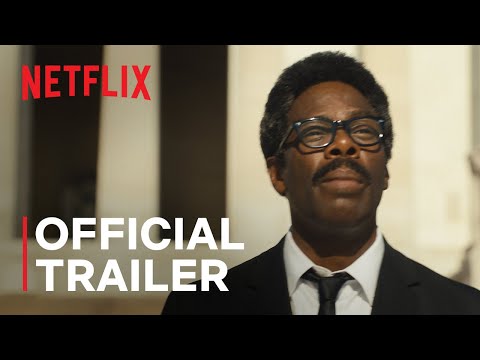
Colman Domingo in RUSTIN

In the first ten minutes of Steven Spielberg's LINCOLN, we see Daniel Day-Lewis as Abraham Lincoln talking to two Black soldiers on a Ci...