December 1947. A new play by Tennessee Williams premieres on Broadway. The play, A STREETCAR NAMED DESIRE, will come to be regarded as a classic. Did you know that the original Blanche DuBois in A STREETCAR NAMED DESIRE won the Best Actress Oscar in 1990? Jessica Tandy played Blanche DuBois in the original Broadway cast of A STREETCAR NAMED DESIRE opposite Marlon Brando, Kim Hunter and Karl Malden.
Those three repeated their roles in the 1951 film version. Jessica Tandy was not a Hollywood name then and the Blanche DuBois role went to the far more famous Vivien Leigh. Leigh, a Best Actress Oscar winner for 1939's GONE WITH THE WIND, won her second Best Actress Oscar for A STREETCAR NAMED DESIRE. In the 1980s, after some Broadway and TV success, Hollywood gave Jessica Tandy the coveted role of Daisy Werthan, a Southern Jewish widow in her 70s in Atlanta. Declared too old to drive, Miss Daisy acquires a chauffeur. A Black man named Hoke. In the Pulitzer Prize-winning and hugely popular play, we follow their relationship from 1948 to 1973. Jessica Tandy's performance in DRIVING MISS DAISY got her the Oscar for Best Actress of 1989.
The play was a two-character production written by Alfred Uhry. He based the Miss Daisy character on his grandmother. She had a chauffeur. Morgan Freeman originated the role of Hoke onstage and had the privilege to recreate his role in the film adaptation.
Alfred Uhry also wrote the screenplay.
About 10 years ago, I shot pilot for a film-related travel show. We shot the project in and around the Atlanta area over a couple of days. Those were two of the happiest days I ever had in my career. I loved every single minute of our experience. I loved our bare-bones camera and production crew. I loved my cohost. They were a joy. The focus of the show was visiting places, locations, eateries and shops that were used in movies or popular with movie crews on location. A Jewish temple seen in DRIVING MISS DAISY really does exist. I visited the temple and got a little history about it from the rabbi. Here's the segment from our pilot.
There were several pleasant surprises in our 2-day shoot. Most of those surprises came from the everyday people we interviewed. I asked each person I interviewed, "What's one of your favorite films?" One location we visited was a bed and breakfast where Morgan Freeman and a few DRIVING MISS DAISY crew people stayed while on location for one scene outside of Atlanta. Run by a gracious married couple, I walked through the main floor and, on a table, I noticed a small framed vintage photo of Confederate soldiers. The husband pointed and gently remarked "I'm related to this man here. That's why I have the photo."
His wife gave us the main interview about the place, the food and the DRIVING MISS DAISY movie crew. I finished the interview by asking "What's one of your favorite movies?" Honestly, I expected her to say something like STEEL MAGNOLIAS. Her answer? "Spike Lee's DO THE RIGHT THING." She added that she felt its message was extremely important. (Ironically, millions of us felt DO THE RIGHT THING should've been a Best Picture Oscar nominee. It wasn't. DRIVING MISS DAISY was the winner.)
I posed "What's one of your favorite movies?" to the rabbi. He seemed a bit reluctant to say his answer. He sheepishly replied, "AIRPLANE."
"That's a terrific comedy and it was a box office hit!"
He said, "Yeah, but it's not exactly highbrow."
I told him "Who cares?" It's good entertainment and it still makes people laugh. He did not have to be ashamed of his answer at all. As I was leaving, I thanked him for his time and the tour and told him that I'd heard very nice comments about him before we arrived. I said "So, surely, you must be a great rabbi."
He said, "Thank you. And don't call me Shirley."
I loved doing that pilot. I wish PBS had picked it up.
HBO Max announced it would air the 1939 classic GONE WITH THE WIND, a Civil War epic. John Ridley, the talented African American who won an Oscar for his 12 YEARS A SLAVE screenplay, complained in an article printed by the Los Angeles Times. Ridley felt GONE WITH THE WIND, major box office champ from 1939 through to reissues in the 1970s, should not be shown because of its creaky racial images. Vivien Leigh won the Best Actress Oscar for her work as the headstrong Southern belle, Scarlett O'Hara. Hattie McDaniel co-starred as Mammy and won the Oscar for Best Supporting Actress.
I can well understand. However, I feel it can be shown -- in its entirety -- with a disclaimer before the opening credits saying "This film was made in Old Hollywood days. You will see racial and stereotypes that, in no way, reflect the viewpoints of HBO." GONE WITH THE WIND was removed from the schedule. Temporarily. When it was announced that it would air preceded by a discussion on its racial images and history, I knew we'd see a Black film historian. There is no shortage of Black film critics and historians in this country. Black people who can write and talk about all kinds of films -- new releases, classic Hollywood fare and foreign films. But do you see those people on TV? No. They're available and willing to go on, but white TV producers usually only contact them when...
A. They need recommendations for films viewers should see during Black History Month
B. There's a diversity controversy like "Oscars So White"
C. There has to be a discussion on racial images in films
D. A Black celebrity has died or been thrown in jail.
Professor Jacqueline Stewart, a Chicago teacher and an excellent Sunday night host on TCM (cable's Turner Classic Movies), led the GONE WITH THE WIND discussion. Yep. She's Black.
Instead of Ridley and some other folks being mad at the late Hattie McDaniel, the woman who made history by winning the Oscar for Best Supporting Actress, I say let us see how she made Hollywood history and why she deserved that Oscar. Move on to asking why TV news producers and syndicated film review show producers have kept the TV field of film critics segregated. It's been predominantly white male. This goes from when each network morning news program -- on CBS, ABC and NBC -- had a weekly film critic who did reviews on Friday. Then there was the famous Siskel & Ebert film review show and similar duos that followed. Black critics were overlooked or just downright ignored. Look at the fine 2017 HBO documentary called SPIELBERG. It runs an interesting 2 1/2 hours. There are 7 film journalists giving soundbites about Steven Spielberg in that documentary. Not a one is Black. There's not even a Black film critic in the 10 minutes devoted to Spielberg's THE COLOR PURPLE. All the comments about that film are delivered through the white gaze.
I worked as a regular on local New York City morning news programs from 1992 to 1999. The first show was on WNBC. That job lasted from 1992 to 1995. The next one, on local Fox TV, lasted from 1995 to 1999. I was approached for each job. I quit each one because I felt a definite inequality of opportunities. During the first four years of my professional TV career, I was a weekly film critic on Milwaukee's ABC affiliate. I was half of a weekend film review team that aired on a local independent station.
The work got me noticed by Chicago PBS. Execs contacted me to audition to be half its new film review team when Siskel & Ebert left PBS for Disney syndication.
I went to WNBC's new project, WEEKEND TODAY IN NEW YORK, after three great years at VH1. There, I had my own weeknight prime time talk show. I'm proud to say I got excellent reviews from the New York Times, People magazine and TV Guide.
Not only that -- VH1 flew me to London for a special one-hour interview of Paul McCartney and, on St. Patrick's Day in 1989 while I was in L.A. taping for VH1, Lucille Ball invited me to her home that evening for cocktails. Of course, I went.
I accepted the part-time WNBC offer because, when I met with execs, it was mentioned that I could do weekend film reviews in the studio. This appealed to me. I grew up in Los Angeles. Neither in L.A. or in New York City, had I ever seen a reflection of myself in film reviewers on TV. I wanted to do reviews to show that Black people could do them. I hoped I could help open a door for others.
The day before the show premiered, the Caucasian producer said "I don't think you have the skills to do film reviews." I would do lifestyle features and be the funny man-on-the-streets. I challenged my Caucasian producer. I fought to do film reviews. I would've had an easier time getting a permit to open a Hooters in Vatican City. I did movie reviews on three consecutive weekends. Even though one of the anchors complimented me on the writing and viewpoints on the air, the news director forbid me to do any more reviews. No reason given. He aired my taped interview of Robin Williams who was promoting his new film, 1993's MRS. DOUBTFIRE. The news director refused to air my taped interview of Robin Williams' co-star, Tony-winning playwright and actor, Harvey Fierstein. His reason was this: "I have a problem with him being openly gay." A TV news executive in New York City said that. Not a local TV news exec in Biloxi, Mississippi. I relayed his statement to Harvey. Harvey was once a guest on my VH1 talk show.
The WNBC news director called me in for a January 1995 meeting. He wanted me for another year on the show. He said that my work was very good and I was very popular with viewers. However, I would only be a part-time WNBC News employee. Only on weekends. I'd never graduate to full-time and I would never move up to doing segments for the network edition of WEEKEND TODAY. And I would no longer be under contract. I gave him my two weeks notice. I walked away from a hit show.
To put this in perspective, Billy Bush was hired by WNBC local news in 2001. He had no prior TV experience. He'd been a rock morning radio DJ in Washington, DC. He did lifestyles features on WNBC local news. Four months after his local news debut, he was doing segments on TODAY with Matt Lauer. Two years later, he'd been added to NBC's ACCESS HOLLYWOOD. In the summer of 2010, college student Cody Gifford, the son of Kathie Lee Gifford, did weekly film reviews on TODAY. He was on summer vacation and had taken a film course in his previous semester. I had more credentials and experience on my resume than Billy and Cody did. But it seems they had ... le privilege du blanc.
At local Fox5's GOOD DAY NEW YORK, the situation was sunnier. I had weekday exposure. I did funny man-on-the-street live segments. Several items revealed in my celebrity interviews were picked up my national press. I was told that my work was good and I was popular with viewers. But in 1998, new management had renewed my contract -- for $10,000 less. In 1999, I was told I was wanted for another year. Without a raise. I decided to move on.
ABC News hired me in 2000 to be the weekly film reviewer/historian on its live, hour-long Lifetime TV production called LIFETIME LIVE. I was hired after I pushed for an audition. Why did I push? Because the white producer kept asking "Does he know anything about movies?" I got the job. The show lasted one year. I loved that job. I wrote, researched and performed an 8-minute segment live every Friday without TelePrompTer. And I wrote reviews for the show's website. Besides the reviews of 2 new theatrical releases and a DVD release, it was my idea to recommend a strong performance by an actress in a classic film as a "Women in Film" history spot considering it was Lifetime TV.
For this network job, I got $500 a week and, as the ABC News rep said, "...not a penny more." $500 a week -- before taxes. Yes, I loved my network TV job even though I could've made more money wearing a paper hat and working behind the counter in a fast food franchise.
I heard that CNN was seeking an entertainment reporter in 2002. I contacted the producer. He asked if I'd ever done entertainment reports. I was no longer interested in the job. I pitched myself to CBS SUNDAY MORNING from the 1990s to 2004 to be an entertainment contributor. I never got a response. Oh. About pitching myself. I got myself the following jobs:
VH1 veejay/talk show host
CBS Late Night semi-regular on THE PAT SAJAK SHOW
WNBC News, WEEKEND TODAY IN NEW YORK
Fox5, GOOD DAY NEW YORK
ABC News, LIFETIME LIVE
PBS New York, Host
Food Network, TOP 5 Host
The Whoopi Goldberg Morning Show on PREMIERE RADIO, Entertainment contributor
I got myself those jobs because -- during all that time -- broadcast agents (who were all white) turned me down for representation. They usually said, "I wouldn't know what to do with you."
That, in a way, ties back to why a lot of us African Americans wanted to be entertainment contributors. We knew the systemic racial barriers Black/Latinx talent hit in the entertainment industry. The Hollywood Credo was "Black stories don't sell." Because top studios wouldn't green light stories with predominantly Black casts, there weren't as many work opportunities for Black actors and filmmakers. If there wasn't work for Black talent, agents would say "They're not gonna bring me in a big 10% like a Reese Witherspoon or a Robert Downey Jr. So why bother representing them?" If you get Netflix, go there and watch the first 10 minutes of a Chelsea Handler special. It's called HELLO, PRIVILEGE? IT'S ME, CHELSEA. In her opening segment, she tells how easy it was for her to get show biz representation. Tiffany Haddish and Kevin Hart tell her how they could not. They had to ask their white friends who had agents if they could help hook them up with a meeting for one. I saw John Leguizamo in a PBS special talk about having that same experience.
If a Black filmmaker made a film that got a standing ovation at the Cannes Film Festival, that's terrific news. However, it doesn't mean Hollywood will give him/her the juicy marketing budget that it would give a white filmmaker. THAT'S where we Black entertainment contributors and talk show hosts come in. We know how that game goes. We want to spotlight Black/Latinx talent so folks will see the work and the directors/actors can get more work. if their film does mild business at the box office, that gives Hollywood a chance to recycle its tired, discriminatory "Black stories don't sell" philosophy. Unfortunately, when pitching features on up and coming Black/Latinx talent, Black entertainment contributors have to punch through white bosses saying "I don't know who these people are. Why should we do a story on them?" and publicists not giving Black entertainment journalists equal opportunities on the red carpet. After stars have chatted with white entertainment reporters, I've seen publicists whiz their stars past the Black reporters on the red carpet so quickly that the stars experienced G-force. People of color in entertainment press, be they focused on Hollywood or Broadway, have often been treated like second class citizens. My WNBC news show producer nixed my opportunities to do live in-studio interviews of actress Pam Grier, singer Dianne Reeves and singer Patti LaBelle. She felt they were "not our audience" and viewers wouldn't be interested.
In the second month after the 1992 premiere of WNBC's WEEKEND TODAY IN NEW YORK, I was assigned to cover a Madonna press event. Unexpectedly, I got soundbites from her.
Katie Couric left me a voicemail message at work congratulating on my piece. The TODAY Show contributor couldn't get anything at all from Madonna. As the months rolled by, I'd run into Katie in the 30 Rock commissary grabbing a bite. One time, she came over to me and complimented me on my work. She'd seen my VH1 talk show. She praised me on my talent followed by "Why isn't your career bigger than it is?" Bless her heart. I'm sure she thought the playing field was level. By the way, there's a major difference between "Why isn't your career bigger than it is"? and "Why isn't your career bigger than it is? What can I do to help?"
Our lives were suddenly, drastically changed by the coronavirus pandemic. During our health lockdown, the murder of George Floyd brought the national virus of racism to a fever pitch. "Black Lives Matter" became a global chant in protest marches. Then companies got "woke." They started embracing the "Black Lives Matter" statement. In entertainment, TV shows stopped streaming episodes that had white actors in blackface. I had no idea so many modern shows had blackface moments. White actors who'd been doing the voiceovers for Black characters in animated shows stepped away from their jobs to allow actual people of color to do the voiceovers. Last month, Jon Stewart said that he could've done more to have racial diversity in his THE DAILY SHOW staff. I love that show. Nevertheless, over 10 years ago, I always noticed Jon's writing team was practically all-white each time it went onstage to accept Emmy awards. Last month, the co-creator of FRIENDS revealed she could've done more to bring diversity into its cast. Hello! Oprah brought up the all-whiteness of FRIENDS when she had the cast on her show in the 1990s.
In 2009, I saw Disney's THE PRINCESS AND THE FROG. How I loved seeing Disney's first African American princess. The story was delightful and the animation gorgeous. Then Princess Tiana was gone. I wondered if she'd entered an animated witness protection program for some reason. In 2013, Disney's FROZEN comes out and it's all about Princess Elsa. Blonde Princess Elsa gets a FROZEN sequel, she gets a star spot in Disney on Ice and she gets a Broadway musical based on FROZEN. One Halloween on GOOD MORNING AMERICA, did Robin Roberts dress up like Tiana from THE PRINCESS AND THE FROG? No. They put a long platinum blonde wig on Robin's head and made her dress up like that frigid white girl.
Another Oscar-wining box office champ starred Hattie McDaniel and caused a controversy. Disney's SONG OF THE SOUTH is a 1946 live action/animated musical fantasy about life on a plantation. Hattie plays the plantation cook. She's friends with storyteller Uncle Remus. They perform a song together after he introduces the Best Song Oscar winner, "Zip-A-Dee-Doo-Dah." For decades, that song had been the Disney company signature tune. No more. Today, Disney hides that feature. You cannot see it on Disney sites. Still, its Splash Mountain ride at Disneyland still had the SONG OF THE SOUTH plantation character images from the movie. The chants of "Black Lives Matter" forced Disney to get "woke." Finally, Princess Tiana will make a comeback. The Splash Mountain ride will be renovated with a THE PRINCESS AND THE FROG theme. Here's some Hollywood history. Hattie McDaniel was the first Black woman to be nominated for and to win an Oscar. The first Black man to receive an Oscar was actor James Baskett. He was presented an honorary Oscar for his portrayal of Uncle Remus in Disney's SONG OF THE SOUTH.
This 2020 wave of "woke"-ness tells me that folks and companies who considered themselves to be quite liberal had not really embraced racial inclusion and equal opportunities -- and they knew it. They treated Race like it was a Jehovah's Witness knocking at the door early on a Saturday morning. They pretended to not be home and peeked at it through the Venetian blinds until it went away.
Let us praise the late, legendary Lorraine Hansberry. She made history in three areas -- three big areas -- that do not get the attention they deserve. Especially during Pride month on TV.
As you know, playwright Lorraine Hansberry was the first African American woman to write a play that was produced and performed on Broadway. The play was A RAISIN IN THE SUN. The story dealt with modern-day segregation in the Chicago area as we focused on an extended working class family that dreams of owning a home in a better neighborhood. A home with a front yard and a backyard. The title of the play came from a line in a poem by Langston Hughes. The poem is "Harlem." Hansberry was 29 when A RAISIN IN THE SUN opened on Broadway in March 1959.
In the cast were Sidney Poitier, Ruby Dee, Claudia McNeil, Diana Sands, Ivan Dixon, Lou Gossett Jr and John Fiedler.
Those members of the original cast repeated their roles in 1961 film version from Columbia Pictures. It's pretty rare when original members of the cast of a Broadway hit get to recreate their performances for a Hollywood studio film adaptation. What's even more rare was seeing the name of a Black person under the words "Screenplay By."
In the Old Hollywood history of talking films, movies released by major Hollywood studios after 1927's THE JAZZ SINGER from Warner Bros., Black writers did not get equal opportunities. In 1939, the same year GONE WITH THE WIND was released, RKO gave the public a blessedly short, sentimental tale of pre-Civil War days called WAY DOWN SOUTH. The movie runs about 65 minutes and was made as a vehicle for a boy singer named Bobby Breen. The kid really did have a beautiful voice. With his natural, down-to-earth manner, he should've been in Warner Bros. features with Pat O'Brien or James Cagney as a boy from the wrong side of the tracks who possessed a sweet voice, ripe for radio popularity. Breen plays the son of beloved plantation master in WAY DOWN SOUTH. All the Black people who work on the plantation sing and dance, basically, because master has never and never will sell any of them. Black veteran actor Clarence Muse plays a butler in the big house. Muse co-wrote the WAY DOWN SOUTH screenplay with -- Langston Hughes. I kid you not. Their names are onscreen in the opening credits as writers. That was 1939.
You never saw the name of a Black woman onscreen in credits as a writer -- until 1961.
Lorraine Hansberry wrote the play. Lorraine Hansberry wrote the screenplay. To me, that is major Black History and Women's History.
During Pride month a couple of years ago, TCM (Turner Classic Movies) aired films with an LGBTQ connection. That June, we saw films starring gay actors and films based on works by gay playwrights such as Edward Albee, Tennessee Williams and Harvey Fierstein. We saw the movies WHO'S AFRAID OF VIRGINIA WOOLF?, CAT ON A HOT TIN ROOF and TORCH SONG TRILOGY. I watched to see if there would be any Black representation. There wasn't. And there could have been.
Lorraine Hansberry was young, gifted, Black...and a lesbian. An out lesbian. To see Lorraine Hansberry's name on the big screen under the words "Screenplay By" in a top Hollywood studio release was a first. It's Black History, Women's History and LGBTQ History.
Lorraine Hansberry: Sighted Eyes/Feeling Heart is an excellent documentary on the late, great playwright/screenwriter and activist done for AMERICAN MASTERS on PBS. It's streaming free for Pride month. To see it, go to this link and then scroll down:
This is the classic foreign comedy that was remade by director Blake Edwards and became a 1982 box office smash bringing its star, Julie Andrews (Mrs. Blake Edwards), another Oscar nomination for Best Actress. Before I write about the 1930s movie, let me tell you that you'll appreciate it more if you've seen these three other classic films: THE RED SHOES (1948), Hitchcock's NOTORIOUS (1946) and CASABLANCA (1942). Now let's visit the original 1933 version of VICTOR AND VICTORIA.
There are some mighty fine classic film available from KinoLorber.com. Check out that website when you have time.
KINO MARQUEE is an outlet of the company and, in these pandemic days, has Virtual Cinemas. I'll give you a link for that info at the end of this post. Kino Marquee has released "gorgeous restorations" of three foreign films for Pride month. These three films are being promoted as "Pioneers of Queer Cinema." The Virtual Cinema event for the NY Film Forum slated to start on July 3rd is -- 1933's VICTOR AND VICTORIA. It's a musical comedy in German with English subtitles. Kino Marquee didn't exaggerate. It is a gorgeous restoration.
It's an entertaining movie you should see if you're a classic film enthusiast. First of all, it gives you a greater appreciation for the Blake Edwards remake. His version is even more inspired than we first realized. I consider 1982's VICTOR/VICTORIA to be a screwball comedy classic. Truly, it's an example of a remake outshining the original to which it's fairly faithful.
If 1933's VICTOR AND VICTORIA seems more light-hearted than some 1920s/early 30s German films you've seen, it was made in Germany during the waning days of the Weimar Republic. In other words, it was made before Hitler took control.
Like Julie Andrews in the remake, Susanne (Renate Müller) is an aspiring singer making the audition rounds. She's young, sweet and possesses a good voice. But she's having no luck. She's out of work and broke. She meets a middle-aged actor who's also making the rounds and also in need of work. He's a bit of a ham actor, yet he's a sweetheart of a show biz veteran. He knows the business and attempt to cheer Susanne up. "Everyone starts at the bottom," he says. He adds, some of it in song, "Dear child, just don't give up. One day in spring, luck will call at your door." Susanne wants to be "a star without any equal."
Blake's remake came out in the 1980s when gay America was coming out of the closet, not just in society but in popular entertainment whether in disco music via performers like Sylvester and The Village People or in movies like MAKING LOVE, PERSONAL BEST and SILKWOOD. There was also the out-of-work actor gender-bender hit, TOOTSIE. In 1981, Tony Randall played a gay widower in the unjustly forgotten NBC sitcom called LOVE, SIDNEY.
In the German VICTOR AND VICTORIA, the middle-aged actor who who befriends Susanne is heterosexual. He's a straight guy who occasionally did drag onstage for laughs as a lady of Spain. Making him gay in the 1982 remake (and played wonderfully by Robert Preston) opened up the story for more observations on sexual roles, gender images and sexuality.
At a Berlin cabaret one night, the older actor, Fritz, coaxes Susanne to do his lady in Spain drag routine. She does. The audiences love it -- and there's an agent in the audience. Unexpectedly, doing that routine was just the break she needed. However, the agent thinks she's really a young man who does great drag. She and the older actor friend keep her gender a secret because she's getting great bookings and they're making money. The secret is also kept in the Julie Andrews version co-starring James Garner.
Susanne gets star billing as a revue headliner. Taking seats one night in the front row is Robert with his snooty blonde date. The Robert character was Americanized and played by James Garner in the remake. In the original, Susanne -- while still pretending to be a male -- is smitten with Robert. Robert is played by Adolf Wohlbrück. He was a dark, dashing, debonair and talented actor who got out of Germany and changed his name to ... Anton Walbrook.
He went on to success in British classics. Most notably, he was Boris Lermontov, the head of the ballet company, in 1948's THE RED SHOES.
It's a damn good thing he got out of Germany. Walbrook was half-Jewish and gay. Take a look at this trailer.
In the original, Fritz has a crush on a chorus girl who has a crush on "Victor." She looks at Susanne onstage in drag and sighs, "Such a wonderful boy." That chorus girl character is not in the remake. But Blake Edwards gave us one of the most refreshing and welcomed openly gay characters in a Hollywood film. He's "Squash" Bernstein, the tough and lovable bear of a bodyguard to the James Garner character. He's not just a bodyguard. They're friends. Rarely did -- or does -- Hollywood give us a straight/gay male friendship. Bernstein was played delightfully by former NFL star, Alex Karras.
1933's VICTOR AND VICTORIA was written and directed by Reinhold Schünzel. Starting his career in the silent film era, he was an actor and a director. He directed a couple of MGM releases for 1939. One was a Joan Crawford turkey called ICE FOLLIES OF 1939. Reinhold Schünzel had a key supporting role in the classic Alfred Hitchcock film, NOTORIOUS, starring Cary Grant, Ingrid Bergman and Claude Rains. Schünzel played the Nazi dinner guest who almost drank the poisoned coffee.
He acted in a bold 1919 silent film, also made in Germany. DIFFERENT FROM THE OTHERS is about two men, classical musicians, who fall in love with each other. A blackmailer, who seems to be in the closet, casts a cold shadow over the relationship. Schünzel played the blackmailer. Starring as an openly gay man in love was actor Conrad Veidt. By the way, you see same-sex couples dancing in this 1919 foreign film. There's a bit of a similar plot in the groundbreaking 1961 British film, VICTIM, starring Dirk Bogarde. Conrad Veidt would become known to millions of moviegoers as the main villain, the Nazi Major Strasser, in CASABLANCA.
Veidt played a respectable homosexual and, off-screen, he was married to a Jew. He had to get the hell out of Germany too. And there you have it.
For more information on the PIONEERS OF QUEER CINEMA Virtual Cinema presentation of 1933's VICTOR AND VICTORIA, click onto this link:
One of the most terrific trios of talent brought together for work in Hollywood musicals was Fred Astaire, Ginger Rogers and Hermes Pan. Pan not only became close, longtime friend to Astaire, he was Astaire's top choreographer and collaborator. If you believe in reincarnation, you'd surely feel he and Fred were partners in a previous life. For two men who were unrelated, they looked like they were brothers.
Whereas Gene Kelly had an affinity for the ballet, Astaire had ballet training in his youth but preferred Black music and a swing/jazz beat. So did the man Astaire referred to in his autobiography as "Pan." Hermes Pan. The Tennessee-born son of Greek immigrant dad and a Latina mom. He moved to New York City with his family when he was 14. I heard from a Debbie Reynolds friend that Pan loved Harlem. He, Astaire and Rogers were Broadway veterans before they worked together in Hollywood.
Hermes Pan choreographed the dance numbers in the classic Fred Astaire and Ginger Rogers RKO musicals of the 1930s. Astaire, Rogers and Pan teamed up to make original movie musicals such as TOP HAT, FOLLOW THE FLEET, SWING TIME and SHALL WE DANCE -- all with new songs and new dance numbers. He choreographed numbers for Fox musicals in the 1940s and went from behind the camera to in front of it dancing with Betty Grable and Rita Hayworth. Here's Astaire and Rogers dancing to a song they introduced, "Pick Yourself Up," in their 1936 classic, SWING TIME. Music by Jerome Kern and Dorothy Fields.
Here's a clip of Hermes Pan with Betty Grable in Fox's 1942 feature, FOOTLIGHT SERENADE.
FOLLOW THE FLEET (1936) had an original score by Irving Berlin. Here, Astaire and Rogers dance to "Let's Face the Music and Dance," a number that was visually referenced in 1981's PENNIES FROM HEAVEN and 2017's THE SHAPE OF WATER.
Fred Astaire and Hermes Pan are in 1968's FINIAN'S RAINBOW. That film marked Astaire's last appearance in a big screen musical. Pan did the choreography. The two appear together briefly during "When The Idle Poor Become The Idle Rich," a number sung and danced by Astaire with chorus dancers. Astaire as Finian sits in a barber's chair when we see them.
The two men danced together only in one film, a 1940 Paramount musical called SECOND CHORUS. Astaire plays a swing band musician and vocalist who, of course, can dance. Johnny Mercer co-wrote the songs. Paulette Goddard was the leading lady -- and she partnered with Astaire for "I Ain't Hep To That Step But I'll Dig It."
There was another song and dance number. Astaire's partner was -- Hermes Pan! But "Me and the Ghost Upstairs" was deleted from the final print. Here's the deleted number with Pan dancing under a sheet as the ghost. Notice the women's shoes Hermes Pan is wearing. Click onto this link to see it:
In my opinion, that deleted number shows us that we should revise a popular old quote. The updated revision should be: "Ginger Rogers -- and Hermes Pan -- did everything Fred Astaire did, only backwards and in heels."
I still say that Whoopi Goldberg should've listened to me and interviewed him on her radio show. In New York City, back in 2006, Whoopi Goldberg debuted in her own live weekday morning radio show called Wake Up with Whoopi. The Premiere Radio production aired in several cities across the country. When I had my own prime time weeknight celebrity talk show on VH1, called Watch Bobby Rivers, Whoopi was one of my first guests. She was promoting her 1988 film, CLARA'S HEART. She liked my work. Also, she noticed that I did the half-hour show without a TelePrompTer, without cue cards and without an earpiece. When she got her radio show, she wanted a Black person who could be a weekly contributor doing film reviews and other entertainment news. She contacted me and I got the job. I am still grateful to her for that gig. During that time, I saw a mockumentary that was so fiercely funny, so blistering and brilliant, that I had to know more about its maker. The writer and director was a professor of film at the University of Kansas. An African American talent, his name -- Kevin Willmott. I feel now as I did when I watched that DVD. His mockumentary, C.S.A.: THE CONFEDERATE STATES OF AMERICA, should have received an Oscar nomination. The writing, the direction, the cinematography and the acting in it are that good. The mockumentary is about alternate history. We see a modern day America, but an America as it would be had the Confederacy won the Civil War. We see this through the eyes of a British film crew shooting a documentary here in the USA for PBS television. The "documentary," the TV channels, commercials and all the station ID's are done as if we live in the Confederate States of America. This mockumentary is ... well, imagine a Ken Burns-type project having been done by Dave Chappelle.
Kevin Willmott's knowledge of classic films made me gasp. The way he inverted D. W. Griffith's 1915 film, BIRTH OF A NATION, with Abraham Lincoln needing to flee via the Underground Railway was genius. The same applies to his look at a Hollywood film in the years soon after Hattie McDaniel won her Best Supporting Actress Oscar for 1939's GONE WITH THE WIND.
Hattie McDaniel was the first person nominated for an Oscar for playing a Black person. The third was Ethel Waters for playing the illiterate grandmother and domestic down South in 1949's PINKY, a race drama directed by Elia Kazan. The second person to get an Oscar nomination for playing a Black person was a white British actress named Flora Robson. Robson had played Queen Elizabeth in two historical dramas and she played the sad, old housekeeper who tells us the tragic love story of 1939's WUTHERING HEIGHTS. Warner Bros. covered Robson with dark make-up and slapped a pair of hoop earrings on her to have her play the stern Haitian maid to Ingrid Bergman's character in the romantic costume drama, SARATOGA TRUNK, a 1945 film co-starring Gary Cooper.
Flora Robson got a Best Supporting Actress Oscar nomination for playing the dark Haitian maid. Kevin Willmott obviously is aware of that fact when you see a "clip" from a 1940s classic in his mockumentary. Click onto the link for a look at the mockumentary's trailer:
The way Willmott skewers modern-day racism is hilarious, politically incorrect and probably more relevant today than when it was released in 2004. I watched it then contacted Willmott via email. I introduced myself, told him I worked on-air with Whoopi Goldberg and wanted to pitch him enthusiastically to her. I wanted her to do a phone interview with him about C.S.A.: THE CONFEDERATE STATES OF AMERICA if he was interested. He absolutely was. I pitched him to Whoopi. I'd given her a DVD of the mockumentary. Unfortunately and surprisingly, she was not interested. I stressed that I felt Willmott would move on to even bigger work. Whoopi just wasn't interested. I got back to Kevin Willmott with the disappointing news. He was extremely gracious to me for pitching him. A real gent, that Kevin Willmott. And a real talent. He did, indeed, move on to even bigger work.
Kevin Willmott and Spike Lee won Oscars for their adapted screenplay to 2018's BlacKkKlansman. The film was a nominee for Best Picture.
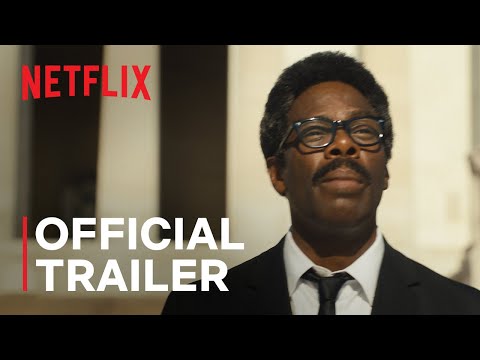
The current collaboration, DA 5 BLOODS, is now on Netflix. It's received some mighty fine reviews and Oscar buzz for actor Delroy Lindo's performance. Here's a trailer.
This week came the news that Kevin Willmott is at work on a screenplay for a biopic on the late tennis great, Arthur Ashe. Ashe won the U.S. Open during the racially turbulent Civil Rights era of the 1960s. He was an activist for Civil Rights and AIDS awareness. He succumbed to AIDS-related pneumonia in 1993. He'd retired from tennis in 1980. The film has the full support of the Arthur Ashe estate. Bravo, Kevin Willmott!
On HBO Max, viewers can see some of the same classic films usually seen uncut and commercial free on TCM (Turner Classic Movies). The 1939 classic, GONE WITH THE WIND, was in the slate of films to be aired but it's been pulled temporarily because of the Old Hollywood images of Black people in that Civil War epic. The lead character is the headstrong Southern belle, Scarlett O'Hara, played by Vivien Leigh.
Two female stars in the film won Oscars. Vivien Leigh won the Best Actress Oscar and Hattie McDaniel took the Best Supporting Actress award for her performance as "Mammy." To me, Leigh is riveting in the role and commands the screen with her every scene. The only person in the cast who can pull focus away from her is Hattie McDaniel. McDaniel is that strong and charismatic a presence and an actress. She was the first Black performer nominated for an Oscar -- and the first to win.
The recent protests over the murder of George Floyd coupled with the much-needed conversation on systemic racism being a hot topic, HBO Max temporarily yanked the 1939 classic. Also, an item in the Los Angeles Times written by Oscar winner John Ridley. He wrote that the film, based on a best-selling novel of the same name, "glorifies the antebellum South" and "romanticizes the Confederacy..."
John Ridley, the Oscar winner who wrote the article in the Los Angeles Times, is an African American screenwriter. He won his Oscar for 12 YEARS A SLAVE. Ridley directed a strong documentary about the violence that erupted in Los Angeles due to no white cops being punished for beating Rodney King. The documentary, LET IT FALL, is on Netflix and it airs on ABC June 16th in prime time.
Ridley feels that GONE WITH THE WIND should be removed from the HBO Max slate. I understand his anger, but I don't feel it should be removed. It could be aired with a disclaimer that appears before the film's opening credits, a disclaimer saying "The film you're about to see was made in Old Hollywood and contains outdated race/gender images and racial stereotypes that in no way reflect the viewpoints of HBO." Something like that.
Which brings me to this HBO Max item. GONE WITH THE WIND will return with a discussion that puts it in historical Hollywood context. I bet you they'll be lining up Black critics or film historians for that chat.
If that happens, the situation could shine a light on an area of racial inequality in the arts. The lack of Black people seen as film critics or film historians on a regular basis. Going back to the 1980s, the field of film critics and hosts on film channels has been predominantly white. In New York City alone there are plenty of Black people who can talk and write about new movies and classic films. However, we are usually only contacted for airtime when...
A) It's Black History Month
B) There's a diversity controversy like "Oscars So White"
C) A discussion about Black images in a film needs to be held
D) A Black celebrity dies or gets jail time.
Other than that, we are not part of the general film discussion. We're not asked to discuss the new Tom Hanks, Cate Blanchett or Meryl Streep movie. We're not asked to discuss Hitchcock, Billy Wilder or Martin Scorsese. We are overlooked or downright ignored. Did you see the 2017 HBO documentary called SPIELBERG? It's a good documentary that runs about 2 1/2 hours. There are 7 film critics/historians seen in that feature. Not a one is Black. There's wasn't even a Black film critic giving soundbites in the ten minutes devoted to Steven Spielberg's production of THE COLOR PURPLE.
When 12 YEARS A SLAVE opened in New York, I saw an ad for it in the newspaper. The ad had about a half dozen rave review quotes from critics. I was familiar with all those critics. Not one quote was from a Black critic. That was back in 2013. A current article in TIME magazine, available online, is "People Really Do Get Their Civil Rights History From Movies Like The Help. The Problem With That Is Clear." What should be added is that the reviews of such films in major publications are done by white critics. We get reviews of movies about Black life in Civil Rights era stories written through the white gaze.
We need to move on from 1939's GONE WITH THE WIND and start bringing Black/Latinx critics into the film arts conversation. The overall conversation. That goes for Broadway too.