A biopic on the late Susanna Foster could show the sad side of the possessing the kind of talent that Meryl Streep's character longed for in this year's FLORENCE FOSTER JENKINS. When Susanna Foster was a teen and young woman, she could sail the high C's. Vocally, that is. At Universal, where she made most of her movies, she was sort of the junior varsity Deanna Durbin. Durbin was Universal's queen of musicals in the 1940s in the same way Judy Garland was at MGM. In fact, in their adolescence, Garland and Durbin sang together in a 1936 MGM musical short. Judy was already Judy. Durbin hadn't had her first name changed. She's Edna Mae. Judy sang swing and Edna Mae sang operatically. The story goes that MGM's studio head kept Judy and unintentionally let Edna Mae go. At Universal, Deanna Durbin rescued the financially troubled studio with the Depression era musical box office champ that embraced the country's love for classical music, 100 MEN AND A GIRL. She's the teen girl with the great voice who sings with the 100 out of work male musicians. Deanna Durbin, in her second major Universal film role, was a star -- and the film got an Oscar nomination for Best Picture of 1937. Reportedly, at the same time MGM was looking at young Judy Garland and Canadian Edna Mae Durbin, 12 year old Susanna Foster landed a contract at MGM. But nothing happened for her there. Things wouldn't really pop for her until she, like Deanna, landed at Universal.
To be frank, Deanna Durbin was a better actress than Susanna Foster. Like Garland, Durbin had a great, almost instinctive screen acting technique. Besides the acting talent, Deanna Durbin also had a Lana Turner-like lusciousness.
Foster never got the continuous glamour treatment that Deanna did but she was likable and she could really sing. In between inactivity under an MGM contract and being hired by Universal, she got the lead in a couple of Paramount comedies. One is 1941's THE HARD-BOILED CANARY.
Like Durbin's movies, it tapped into America's love of classical music and showcased real-life child prodigies in that field. The plot is goofy but the cast gives the assignment a "let's just have fun with it" attitude that floats the story along nicely. Also, we see the real-life young classical music celebrities of the day playing themselves. One should have made more movies and another one went on to hit big in a Preston Sturges comedy classic. For classic film fans, this comedy is a nifty little curiosity piece to see.
The title of the movie was changed -- thank goodness. THE HARD-BOILED CANARY was later called THERE'S MAGIC IN MUSIC. Let me explain the original title. The story takes us from a New York City burlesque theater on 14th Street to the renowned Interlochen Music Camp. A top radio figure hears a great new operatic voice. But he hears it in that burlesque house. Toodles LaVerne sings classical music numbers while her sweet partner enters slowly behind her doing a Gypsy Rose Lee bit in harem attire (costumes by Edith Head).
The audience of men goes wild for the dame with the peek-a-boo outfit. The joint gets raided by the cops. The partner helpd Toodles flee because Toodles has already done time in reform school. Young Toodles is a tough-talking dame who learned to sing by listening to opera records. The radio guy coaxes her to give Interlochen a try. Once she takes the chip off her shoulders, she fits in. Toodles is a hard-boiled canary. Like characters played by Jean Harlow, Barbara Stanwyck and Carole Lombard in the 1930s, she has no problem with making a fist and slugging somebody in the jaw. Yes, Toodles is a handful.
Toodles is a juvenile, so she can't be the love interest for the radio guy played by singer Allan Jones. He did operatic singing as the romantic lead in A NIGHT AT THE OPERA starring The Marx Brothers. The adult romantic interest is played by Margaret Lindsay. She is so relaxed, breezy and warm in this comedy that you expect her to burst into song at any moment. For classic film fans, Lindsay is probably best remembered as the Yankee that Henry Fonda's character marries in William Wyler's JEZEBEL starring Bette Davis.
Besides her operatic selections, Susanna Foster gets to be "modern" when she sings and does imitations of Marlene Dietrich, Katharine Hepburn, Judy Canova and a popular big band singer of that decade named Bonnie Baker.
Teen violinist Patricia Travers appears as herself. Unfortunately for movie lovers, she decided not to make any more films. That's a shame because she's an absolute hoot in THERE'S MAGIC IN MUSIC as the teen grouch. She's got such a natural early Nancy Walker vibe and delivery that you wish MGM had picked her up and put her in Judy Garland, Gene Kelly or Jane Powell musicals as a comic sidekick gal pal. Young and pretty classical pianist Dolly Loehr appears as herself. She'd go on to shine in other movies at Paramount. After having her name changed to Diana Lynn, she'd get big laughs with Betty Hutton and Eddie Bracken in Preston Sturges' THE MIRACLE OF MORGAN'S CREEK, trade wisecracks with Ginger Rogers in Billy Wilder's THE MAJOR AND THE MINOR and get more laughs in OUR HEARTS WERE YOUNG GAY, a hit comedy set in the 1920s.
When I was a kid, there were two Susanna Foster movies that I loved seeing on TV when I came home from school. One was Universal's 1943 PHANTOM OF THE OPERA starring Claude Rains as the Phantom. Foster plays Christine. From what I've read in a few Hollywood history books, Susanna Foster got the role when Deanna Durbin turned it down. I saw this film again a couple of years ago. It's not scary like the Lon Chaney silent version in the 1920s but it's worth a watching for the fabulous singing, the lush Technicolor cinematography and...well, isn't Claude Rains always worth watching?
The other Susanna Foster film I loved seeing on local TV when I was a kid is a creepy 1944 Boris Karloff thriller called THE CLIMAX.
Foster plays an opera singer who resembles the late love of a demented doctor. He gets a hypnotic control over her vocal chords and wants to possess her. We'll see how twisted he truly is. I've experienced THE CLIMAX a few times and would love to experience it again. It should be in a Boris Karloff DVD collection. In those two movies, Susanna Foster got the A-list glamour treatment. But THE CLIMAX was her last film. After that, in the years to come, she endured hard times while also being a devoted relative. From what I've read, she was popular with moviegoers in her Universal years but she still left movies after THE CLIMAX to rescue her two younger sisters from their abusive alcoholic mother. In the mid 1950s, after stage work and a divorce, she left performing altogether to raise her two sons. But her ex-husband was negligent with alimony and child support payments. Foster worked long hours as a receptionist and answering service operator in order to care for the kids. In later years, she was reportedly so broke that she was living in her car. Susanna Foster died in 2009 at age 84.
I found the long-forgotten THE HARD-BOILED CANARY on YouTube under the abbreviated title MAGIC IN MUSIC. Running only about 1 hour and 20 minutes, it's a fun little movie with a look at some real-life juvenile music talents of the day.
I paid to see this highly-publicized feature. Actor, screenwriter and director Nate Parker made a good film. THE BIRTH OF A NATION is not an excellent film, but a good one. Some film critics have compared it in ways to Steve McQueen's 12 YEARS A SLAVE. McQueen's film is steadier in its tone and writing. More polished. Nate Parker could have benefited from a co-writer on his screenplay. Also, McQueen's film is more of a biopic. Both films are based on the accounts of real-life black men who endured the horrors of slavery in America's racist past. White people who proclaimed themselves to be Christians bought and mistreated black people as if they were beasts of burden. Such disgusting, inhumane treatment is seen in THE BIRTH OF A NATION. Parker's film is not wholly a biopic. He takes a real-life person and real-life historical incidents and gives us a Bible story that is relevant today, a story of wrath and love, revenge and forgiveness. He shows us white and black people using the Bible for light and dark purposes. He delivers this parable, if you will, wrapped in a bloody story based on the life of a slave named Nat Turner. Turner was a religious slave in Virginia in the 1830s who led a slave uprising.
The slave uprising took the lives of 60 white men, women and children at night. Retaliation claimed the lives of about 200 black people. Turner's confession was documented. It's not used in Parker's film. However, the confession reportedly revealed Nat Turner to be an intellectual at a time when most black slaves were not allowed to learn how to read. And he was somewhat of a religious zealot. He's a preacher to fellow slaves in the movie. As the story unfolds, he quotes the Bible to inspire the murderous revenge attack. There was a very popular 1967 novel that won the Pulitzer Prize. The novel, THE CONFESSIONS OF NAT TURNER, was written by William Styron. It's a first person narrative by Turner that focuses on his 1831 slave revolt. Why wasn't this book adapted into a major Hollywood movie? Probably for the same reason that best-selling 1964 novel, THE MAN by Irving Wallace, did not become a major motion picture. That novel was about the first black man to become President of the United States. Yes, 1964. It wound up in ABC's 1972 made-for-TV movie line up. The production featured a brilliant performance by James Earl Jones as the president. Those were stories that had revolutionary black lead characters and black supporting characters. That comes to a point about the early screenings this year of THE BIRTH OF A NATION. Those screenings caused hot buzz for the movie. The lack of diversity in branches of the film and TV business needed to be an issue for a long, long time. The story of Nat Turner should have been on the big screen 20 years ago -- like both of the Pulitzer Prize winning plays about working class black Americans written by black playwright August Wilson.
Nate Parker's film was perfectly timed. It hit festivals when "Oscars So White" was still an important hashtag, one that has its place in The Motion Picture Academy's movie to include more people of color into its branches. It also came out during and has an aching relevance to our "Black Lives Matter" movement.
But Parker's film misses in some ways. First of all, he needed a co-writer on the screenplay. That would have helped. And, although a good actor, I would have tried to get something more out of him if I was the director. We see Nat Turner as a young man who has been taught to read by a slave owner's wife. He reads the Bible. He reads quite well. Penelope Ann Miller, in a fine and skilled performance, plays the wife who notices the young slave's interest in reading. She doesn't punish him. She tries to do the Christian thing. Within limits. He can't read just any book in master's house. He can only read what's given to him. The Bible. And when he read aloud in a church service while the wife and others are in the congregation, he gets polite applause. The plantation wife is proud, but we know that the other people in the pews see Nat as little more than a trained animal. He will be sent to the fields.
With his love and fervor for the Bible, slave owners use him to keep their slaves in line. His preaching will keep the uneducated black slaves docile. Nat does this and is the right-hand man for his master while he witness the physical torture of his people. From whipping to mutilation to rape.
Nate Parker has a movie star form and face. His eyes are expressive and he can access his emotion.
He needed to show more steadily growing agitation and anger in the educated Turner. It takes a while for the story to get going. We needed to sense that this "good" slave preacher was a ticking time bomb getting closer to a major explosion every time he witnesses one of his people being abused. And Nate the director spends a lot of time on the face of Nate the actor while missing opportunities to let other elements of the film add to the scene. For instance, when he reads aloud in church, behind him is a painting of the very Anglo-looking smiling Jesus. When Nat gets lethal revenge on a slave owner, there's an image of the holy cross in the background. I would've changed that to a Christ on a crucifix wall display to contrast the slave murder of his master.
Parker used a musical trope that was right out of 1930s & 40s Hollywood movies. In some of those old films it wasn't enough to just to show that the sad butler, maid or field hand was black....they had to score the minority's appearance with "Swing Low, Sweet Chariot" as background music to give you a musical clue that the person was black.
"Swing Low, Sweet Chariot" swells up as we get a close-up of Nat Turner picking cotton. And there was an odd line in a scene with a group of slaves in rebellion mode. They're in a field. It's late afternoon. Nat looks at the sky and asks "What time is it?" Another male slave responds, "About 5:30. 5:35."
"5:35"? They're all uneducated slaves in the woods in the early 1830s. Not guys working at Starbucks.
One strong, important scene could have had more strength, but it would've required Parker to take the camera off his face. You can tell he was influenced by directors Steven Spielberg and Mel "BRAVEHEART" Gibson. A slave woman Nat Turner loves is beaten by white men. The sight of her beaten face resembles photos of the late teenager Emmett Till, the victim of a racist murder in the 1950s. His mutilation and murder became a national news story and the subject of two documentaries. The sight of her face is the kind of viciousness towards the innocent that we needed to see. Parker should have shared the spotlight in that scene. In a way, that's symbolic of the director's work with black women in THE BIRTH OF A NATION. He keeps the attention on himself and doesn't elevate them with a well-written and directed role. Here, he should've been inspired by actress/director Barbra Streisand. She will be the star of a film like THE PRINCE OF TIDES and make herself look fabulous in close-ups. She also shares the spotlight and, as a director, makes her fellow actors stand out. She directed co-stars Nick Nolte, Kate Nelligan, Amy Irving and Lauren Bacall to Oscar nominations.
There are times when you feel like you seen some of this film already. Like in 12 YEARS A SLAVE, there's the kind slave and the alcoholic master who's conflicted over acting with humanity or fulfilling his expectations as a slave owner and treating black people like animals. Then there are smaller scenes that have big impact. For instance, a portly male slave with only one arm is being sold for breeding purposes.
The most awaited scene -- the violent uprising -- is powerful, brutal, bloody. It's black versus white with knives, sword, axes and guns. I won't tell you how the movie actually ends but the final scene seemed to be a lead-in for GLORY, the 1989 historical drama that brought Denzel Washington his first Oscar. Edward Zwick, the director of that film, is an executive producer of Parker's THE BIRTH OF A NATION.
Finally, it was hard to watch Nate Parker and not think of the controversy surrounding him and a 1999 college rape trial in which he was accused and acquitted. The story of this 1999 rape trial surfaced when THE BIRTH OF A NATION was generating Oscar buzz and was on the verge of opening nationwide. The filmmaker proclaims his innocence. While being interviewed on CBS's 60 MINUTES and ABC's GOOD MORNING AMERICA, he was given opportunities to apologize and, perhaps, decrease the controversy. He held to the acquittal and refused to apologize for anything.
Parker learned that it's still a different America for him, apparently. When CAFE SOCIETY came out this year, did any columnist or on-air reporter ask if Woody Allen ever apologized to Mia Farrow?
If I interviewed Parker, I would not ask him about that rape trial and his acquittal. I'm sure I wouldn't get anything new. He's given the same answers worded in different ways. But a Twitter buddy forwarded me an article in which he said that he'd never play a gay character. I'd ask about that.
In an Ebony Magazine interview in 2014, it was reported that Parker said he will never play a gay character in an effort to "preserve the black man" adding that Hollywood offers black men roles that consist of "men with questionable sexuality." Does that mean actor Nate Parker would reject good biopic screenplays about Civil Rights activist Bayard Rustin (the architect of Dr. Martin Luther King's historic March on Washington), poet Langston Hughes or novelist/activist James Baldwin? Paker's statements were made when he was promoting his performance in the 2014 film, BEYOND THE LIGHTS. At no time during the promotion of that well-received film did the news of the controversial 1999 rape trial involving Nate Parker surface.
THE BIRTH OF A NATION. Worth seeing for its historical content. Here's a trailer.
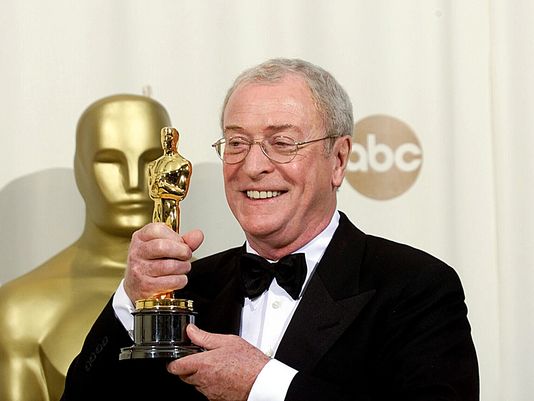
October 11th is NATIONAL COMING OUT DAY. In the spirit, I am re-posting a clip that I love and I hope you'll love it too. The marvelous Michael Caine, Oscar winner, delighted me on my old VH1 talk show called WATCH BOBBY RIVERS. At the time, Sir Michael had recently won his first Oscar. He was voted Best Supporting Actor for Woody Allen's classic 1986 film, HANNAH AND HER SISTERS.
Back in the 1960s, if you saw that a movie had been produced by Joseph E. Levine in it, that movie usually had sexy and scantily clad babes in it. Usually, but not always. Levine seemed to have the producer's creed that "sex sells." The historical British war epic, ZULU, was a hit movie. In it, a screen newcomer named Michael Caine received excellent notices for his performance as an effete British military officer.
Joseph E. Levine was executive producer of this action movie. He was pleased with Michael Caine's performance but he was concerned that moviegoers would think Caine was gay.
The actor, quite the witty storyteller, told me about this little wall he hit early in his career because of a top producer's limited vision.
Michael Caine went on to become an internationally famous film actor. And he'd win two Oscars. He was also voted Best Supporting Actor for 1999's THE CIDER HOUSE RULES. Regarding the gay business that worried producer Joseph E. Levine way back when -- actors such as Tom Hanks, William Hurt, Philip Seymour Hoffman and Sean Penn would win Oscars for playing openly gay characters. Gay talent like Ellen DeGeneres would host the Oscars telecast. And a black, gay entertainer would get his own talk show on VH1 and interview Michael Caine, as you just saw.
I've said it before and I'll say it again. I wish Paddy Chayefsky, the screenwriter of 1976's NETWORK, was alive to see this current presidential campaign. If this campaign was one of his original screenplays, we'd laugh and wonder how he comes up with those outrageous ideas -- the mouthy Manhattan millionaire host of a network reality TV game show becomes the unpredictable Republican candidate for the U.S. presidency. And a former First Lady is his Democrat opponent. But that is our real life, my friends. As CBS news anchor Walter Cronkite used to say at the end of each newscast, "...and that's the way it is." I'm sure you've heard about and/or read about the newest Donald Trump firestorm. He made lewd, aggressive comments about women during the time he apparently was to be spotlighted on NBC's Access Hollywood. He made the comments to former Access Hollywood host,Billy Bush. They were not on camera but had this locker room-type chat while Trump's microphone was clipped onto his clothing. Clipped on and turned on. We can hear Bush laugh at Trump's lewd and rude comments.
The story gets even juicier. The Washington Post reported on Saturday, Oct. 8th, that NBC News was aware of video tape of Trump making those remarks for four days but delayed reporting the story for fear that Trump would sue the network.
This is like a Frankenstein movie from the 1930s with the monster creating fear that it will turn on its creator. NBC tirelessly promoted and publicized Donald Trump as he hosted The Apprentice, a Mark Burnett production that airs on NBC. NBC gave him the electric charges that increased his ego, his fame and his hunger for power. He takes diversity and tosses it aside like the monster picking up and throwing a scared villager. He offended us black people by relentlessly proclaiming that President Obama was not a real American and demanding to see his birth certificate. Yes, a TV game show host did that. Then he outraged the Mexicans. Then the Muslims. But when he made vile horny comments about a white woman, as folks in my old Harlem neighborhood would say, "shit got real." He talked about having the power and entitlement to grab women by their private parts.
Trump gave an apology that really wasn't an apology. He said that the comments were about 11 years old and pretty much do not reflect him today. Then he criticized Bill Clinton's extra-marital affairs, which happened a little over 20 years ago. Billy Bush fared better in this controversy. Much better. He apologized with no "but." He apologized, blaming his irresponsibility on his youth. He was in his mid 30s at that time the remarks were recorded.
In Donald Trump and Billy Bush, we see characters who would have been ripe for satire in a Chayefsky screenplay. We also see TV celebrities whose careers are examples of why we minorities push for diversity in entertainment. The playing field has never been level. If NBC had a young black host of a network game show and the host made red carpet comments that Rudy Giuliani disrespected black people and that Sarah Palin was an absolute idiot who was not the right woman to be a Vice President of the U.S., that host surely would have been replaced for the show's next season. But Trump was still NBC talent as he demanded to see President Obama's birth certificate.
On the Saturday, Oct. 8th, Weekend Edition hosted by Scott Simon on NPR, one guest Scott interviewed about Trump's lewd remarks asked "Why didn't Billy Bush tell NBC he had this video?" I think I can answer that. Billy Bush was not about to bite the corporate hand that feeds him and his family -- and that hand is NBC. Another thing -- and this is major -- is that Billy Bush was hired by NBC news but he was not a journalist. He didn't enter 30 Rock with hard news reporter skills, instincts and experience his bones. I write this as someone who worked at WNBC, knows people who were there when he worked on local NBC news programs in New York City, and I write this as someone who worked with Billy Bush for one week on a radio show back in 2003.
Billy Bush was hired by WNBC News in 2001 when he had a relative in the White House. This was his second relative to hold the office of Republican President of the United States. Billy was the host of a local Washington, DC morning radio show on a rock music station. He'd not taken journalism courses in college. He'd never covered any news stories. He had no TV experience whatsoever. But lucky Billy got hired by WNBC news. He made his debut doing light features -- fashion trends, pop culture news -- and, within six months, he was doing network pieces on the TODAY Show. Then he was booted up to host NBC's prime time version of the Let's Make a Deal game show. Within a year or two of his WNBC debut, Billy became a contributor on NBC's Access Hollywood hosted by Pat O'Brien and Nancy O'Dell. During those years something that seemed like a male version of All About Eve occurred. Billy went from regular contributor to replacing the older Access Hollywood male host, Pat O'Brien. Billy co-hosted the show with Nancy O'Dell. In time, she left the show and he became the primary host. Now Billy is formerly of Access Hollywood. He was added to the host list on NBC's TODAY Show. He's been co-hosting the show's third hour called Today's Take. He's the second member of the Bush Family to be talent on the morning program. Jenna Bush Hager, former White House daughter, was hired and turned into a news contributor.
I worked with Billy Bush for one week when we were judges on the WPLJ morning radio show's in- studio version of American Idol. In person, as on TV, Billy Bush struck me as a charismatic, over-aged and privileged frat boy jock who was lucky to have network dudes determined to make him a well-paid TV host -- lucky because his resumé was rather light. The Trump "locker room" chat was inappropriate talk. What kind of journalist would carry out that kind of conversation while a microphone was clipped on and turned on? AND one of the women Trump made vulgar comments about was Billy co-host, Nancy O'Dell! Billy Bush recently argued with the constantly jovial Al Roker live on TODAY when Billy defended disgraced Olympic swimmer Ryan Lochte after news broke that Lochte lied to Billy on TODAY about having been robbed at gunpoint in Rio.
Billy Bush is not a hard news journalist. But he will be fine. NBC will figure out how to refit, repackage or relocate him.
I've written before that, in its first 50 years, the TODAY Show had only two African American contributors/hosts. They were Bryant Gumble and Al Roker. That was visually noticeable in its 50th anniversary special edition. The show is diverse now but think about it ...only two black people as on-air talent in half a century that started in 1952. Now think of all the black journalists who probably wanted to be on TODAY but got no consideration from its network executives.
Those of you who know me already know this. I was approached to work for WNBC News. It was launching a new program called Weekend TODAY in New York. I was approached to do film reviews, other entertainment reports and some lifestyle features. That appealed to me because then, as now, it's rare to see a black person as the regular film critic on a news show. And black reporters in New York City rarely get the theater beat so they can cover Broadway and off-Broadway. I took the WNBC job in September 1992 and then my assignments were changed. I was to be the "community calendar" guy who told you about things to do around town. I was shifted to be the funny man-on-the-street contributor. Of course, I argued with management about that but I kept the weekend job because I needed the money. My boyfriend had been diagnosed with full blown AIDS. I became his New York City caregiver. He died in June 1994.
I went to WNBC after having had my own prime time talk show on VH1, a show that got a great review in The New York Times. During my VH1 years, I did six months as talent on CBS Late Night. After my VH1 years, I was an occasional guest host on CNBC's Talk Live and I was the host of a summer replacement syndicated late night TV game show. The game show was airing when I was contacted by WNBC. The game show's summer run ended and I took the part time WNBC job. We premiered on September 1992.
After pushing to do them, I got to do occasional entertainment interviews on the show. But, for the most part, I was assigned live shots in shopping malls and at street fairs. At the beginning of January 1995, the news director called me in for a meeting. He told me that my work was excellent and that I was very popular with viewers. However, I would not be moving up to full time employment at WNBC and I would not be doing any entertainment features for the network edition of Weekend TODAY. I gave my two weeks' notice that same day. Why stay there if I would not be moving up?
Billy Bush was getting network exposure on TODAY within six months of his debut on local WNBC. By the following year, he'd been elevated to Access Hollywood. No journalism experience. No previous TV experience. He got the kind of gig I hoped to get. Here's some of the work I'd done on VH1 before I was hired by WNBC in 1992.
And, again, I quit in 1995 when I was told that I had no chance of moving up to network opportunities. That's what I mean about the playing field not being level.
As a friend in Harlem says, "White people be lucky." What a follow up to NETWORK Paddy Chayefsky could've written from all this. Wow.
The second season of the THE RANCH, a sitcom on Netflix, starts Friday, October 7th. Ashton Kutcher, who has a couple of hit sitcoms under his belt already, is the star of this new rurual show. It's no surprise to see him in another sitcom. It is a major surprise that this cattle dung called THE RANCH got picked up for a second season. Basically, it's about grown young adults whose careers didn't pan out. They wind up living at home again with a parent. And a sibling. Kutcher plays the football player who didn't quite become a top NFL star. He returns home to country living on his dad's ranch with his dad and his brother.
I watched episodes of the first season. That viewing falls in this category: "Two Hours of My Life That I Will Never Get Back." The writing was stale and bland. Honestly, a high school class could have composed a smarter, funnier script. Just because it's Netflix and just because a young handsome actor can say the word "vagina" more than once as a punchline, doesn't automatically make the show funny.
Being "edgy" doesn't always make us laugh. It's often a substitute for true wit. But acting is not a steady weekday 9 to 5 job -- and actors need work. Especially actors in the AARP category. Sam Elliott is one such actor. He's absolutely fine playing the no-nonsense, conservative country dad. He and their mother are separated. He's not he character counted on to lob off the edgy punchlines.
There's a character that I liked very much and I kept thinking to myself, "Wow...they should use this mature woman more instead of making us focus on the ex-football player trying to get laid." The character is the mother of the two grown brothers. I looked at the actress some more and then said aloud, "Holy cats, it's Debra Winger!" Yes.It's Debra Winger who was one of the best and strongest new actresses to come along in the 1980s. She fascinated us with her intelligent, working class performances in AN OFFICER AND A GENTLEMAN, URBAN COWBOY and my favorite, TERMS OF ENDEARMENT. She got three Oscar nominations for Best Actress. The third one came for 1993's SHADOWLANDS.
Debra Winger was in that stinky cheese first season of THE RANCH. Her performance was the best thing about sitting through those episodes. She is still fascinating to watch.
I've seen no press about her. Ashton Kutcher did a guest appearance on the Thursday, Oct. 6th TODAY Show on NBC. We saw clips from the first season but we didn't see Debra Winger in any of the footage nor did Kutcher mention her name and Sam Elliott's.
It would be great to see Debra Winger in a better quality product like GRACE AND FRANKIE starring Jane Fonda and Lily Tomlin. It would be great to see her and Sam Elliott get their own spin-off series from THE RANCH. They're good together as the separated parents who still have an attraction to each other.
For all involved, I hope THE RANCH has new writers for the new season. And better material for the gifted Debra Winger. I've missed her.
Recently, I watched MEN IN BLACK on cable's AMC. Remember when that channel was American Movie Classics and showed mostly old Hollywood movies, movies from the 1930s, 40s and 50s? I hadn't seen MEN IN BLACK in a long time and watching it again was a fun way to pass the time on a Saturday afternoon. Not only was it fun, it reminded me how terrific an actress Linda Fiorentino was in that big 1997 box office sci-fi action comedy hit. She played the doctor who works in the New York City morgue and is surprised to find space aliens in a corpse. Only in New York.
Linda Fiorentino was a treat and perfectly cast opposite Will Smith and Tommy Lee Jones.
Linda Fiorentino pulled off a sweet Barbara Stanwyck double home run. She proved to have the comedy gift in that film. She could be tops at screen comedy just like Barbara Stanwyck was in THE LADY EVE, BALL OF FIRE and CHRISTMAS IN CONNECTICUT.
Fiorentino has previously burned up the screen as one of the most sizzling and lethal film noir dames since Barbara Stanwyck played Phyllis in Billy Wilder's classic DOUBLE INDEMNITY. You could not take your eyes off her in 1994's THE LAST SEDUCTION. Critics raved about her in that indie film crime thriller.
In 1999, I hosted a weekly film news show on Manhattan cable. We focused a lot on new releases from indie filmmakers and we interviewed them. One film we highlighted was 1999's DOGMA, a comedy that skewered Catholicism. Linda Fiorentino was in the comedy. She was interviewed on our show. She was a hoot with her understated hip, sophisticated and totally cool sense of humor.
WHERE IS LINDA FIORENTINO TODAY? WHY DIDN'T HOLLYWOOD GIVE HER MORE GOOD SCRIPTS?!?!?! Did she stay in the business or what? I'd love to know the the story on that versatile, interesting actress.
Now...about another movie channel. My favorite movie channel. As I wrote on Twitter over the weekend, I have loved cable's TCM, Turner Classic Movies, since 1999 when I added it to my cable channel subscription list. Actor Ron Perlman, who many will remember from the popular TV series, BEAUTY AND THE BEST and as HELLBOY on the big screen, is a prime time host for October on TCM. I also tweeted "I'd love to see black male guests hosts like David Alan Grier, Robert Townsend or Wesley Morris sometime."
No disrespect to Mr. Perlman. Just a minority TCM fan/viewer observation. AMC, in its old American Movie Classics days, saluted Black History Month. But it never had a black male host. Whoopi Goldberg, a hardcore classic film fan, was a guest host for a while. Her Oscar-winning star status, I'm sure, inspired AMC to offer her that gig. When AMC held auditions for a new host back in the 1990s, my late and wonderful agent tried to get me in for an audition, but couldn't. We were both frustrated because many of the stars of the classic films AMC aired had been guests on my old VH1 entertainment talk show.
Through the years up to and including this one, I've talked to black film reviewers and actors who also noticed how black folks on the whole have been excluded from the host opportunities for classic films. It's as office TV producers feel we don't know anything about or have no interest in classic films. We've seen black artists be Guest Programmers on TCM once in a while. I've written before that a TCM producer contacted me personally to help book Whoopi Goldberg as a Guest Programmer. At the time, Whoopi and I worked together on her national weekday radio show. It aired from 2006 to2008. Whoopi hired me as the weekly movie critic and entertainment contributor. On TCM, I've never seen a black male as a guest host like Ron Perlman will be this month. I can't recall seeing a black female guest host like Whoopi was for a season or more on AMC.
I mentioned David Alan Grier because he was a star on TV's classic hit sketch show, IN LIVING COLOR and an actor in A SOLDIER'S STORY , Oscar nominee for Best Picture of 1984. Grier and I have chatted about our deep love for William Wyler's THE BEST YEARS OF OUR LIVES. Robert Townsend also acted in A SOLDIER'S STORY, along with Denzel Washington and David Alan Grier, and Townsend himself became a film director. He gave us the hit 1987 indie satire about diversity casting called HOLLYWOOD SHUFFLE. Wesley Morris now writes for The New York Times. When he wrote for The Boston Globe, the young man became the first African American newspaper columnist to win the Pulitzer Prize for film criticism.
That's just a programming observation and suggestion. Now where is Linda Fiorentino?
I've written before that Hollywood's lack of inclusion and the need to embrace diversity is evident in how long it took any Pulitzer Prize winning Broadway work of the late and great black playwright August Wilson to make it to be big screen. Neil Simon won the 1991 Pulitzer Prize for his Broadway hit, LOST IN YONKERS. The film version hit the screens in 1993. A CHORUS LINE won the Pulitzer Prize in 1976. The film version arrived in 1985. AUGUST: OSAGE COUNTY received the 2008 Pulitzer Prize. Meryl Streep and Julia Roberts received Oscar nominations for the 2013 movie adaptation. FENCES, August Wilson's play about the life of a 1950s working class black American family, won Wilson the 1987 Pulitzer Prize. THE PIANO LESSON, another play about black life in America, won Wilson the 1990 Pulitzer Prize. Did you get that? Black playwright August Wilson won TWO Pulitzer Prizes for his Broadway dramas about African American life.
Neither play ever got a big screen adaptation like other Pulitzer Prize winning plays did. I was extremely to be able to see the Broadway production of FENCES starring James Earl Jones as the ex-baseball player father and Courtney B. Vance as his son. James Earl Jones was magnificent. He'd been remarkable in another Broadway play, THE GREAT WHITE HOPE, that had been turned into a critically acclaimed 1970. Martin Ritt's film version of THE GREAT WHITE HOPE earned Jones his one and only Oscar nomination, a nomination for Best Actor. Seeing FENCES was one of most thrilling nights of theater I've ever experienced. At the end of the play, there was silence in the audience and then an astounding rush of applause and cheers and a standing ovation for James Earl Jones. The ovation was overwhelming -- as if he'd hit the World Series-winning grand slam home run for the home team.
FENCES should have become a movie starring James Earl Jones in the late 80s. But films featuring predominantly black casts in positive, substantial roles had trouble getting the money to go into production. Just ask director Norman Jewison when he wanted to -- and did -- shoot A SOLDIER'S STORY starring Denzel Washington. The 1984 film was based on the stage hit, A SOLDIER'S PLAY by Charles Fuller. Jewison, who gave us IN THE HEAT OF THE NIGHT (Oscar winner for Best Picture of 1967), THE THOMAS CROWN AFFAIR (1968) FIDDLER ON THE ROOF, JESUS CHRIST SUPERSTAR, MOONSTRUCK and 1999's THE HURRICANE starring Denzel Washington as imprisoned boxer Rubin "Hurricane" Carter, said that no studio wanted to make the film. The story focused on black American soldiers in the segregated troops of World War Two dealing with racism. Jewison offered to a lot less money than usual to direct the film. After A SOLDIER'S STORY came out, one of the Oscar nominations it went on to get was for Best Picture of 1984.
Two-time Oscar winner Denzel Washington and Viola Davis starred in the also Tony-winning and critically hailed Broadway revival of FENCES in 2010. The two stars won Tony Awards for their performances. They star in the film version, directed by Mr. Washington.
FENCES opens Christmas Day. It's been a long time comin'. Here's a link to click onto so you can see the trailer: https://youtu.be/a2m6Jvp0bUw.
I repeat my prediction: Viola Davis will make Hollywood history as the first black actress to have more than two Oscar nominations to her credit.