Wednesday, February 13, 2013

On THE HUDSUCKER PROXY

I loved Tim Robbins in this screwball comedy from the Coen Brothers.  The Hudsucker Proxy was close to being excellent.  Robbins was perfectly cast as Norville Barnes, the poor schnook from the mailroom who's kicked up to a top job in the boardroom.  He doesn't realize it but he's really being set up to take the fall for some corporate greed.
I also loved the production design of this movie that takes place in 1950s New York City.
There were times when it reminded me of Manhattan set designs for the 1940 Preston Sturges classic, Christmas in July.  It was terrific seeing Paul Newman exercise his zany comedy muscles as Sidney J. Mussberger, top man on the board of directors.
From Hud to The Hudsucker Proxy.  Newman got better at comedy when in his prime.  The older he got, the lighter the touch.  He's delightfully loopy in this role.
Norville, while maybe not the smartest guy in town, has a talent for invention.
He'll create a Hula Hoop-like toy sensation that affects the company's profits.
Then there's Amy Archer, a female reporter who's often the smartest guy in the room.
She'll pull a fast one in order to get the scoop she wants.  But we know that she'll ultimately get tripped up in her own game and wind up falling for the fall guy.
If you're a classic film fan, I'd like your opinion on this.  Jennifer Jason Leigh is a mighty fine actress but the Coen Brothers let her make the wrong choice with that accent.  The Coen Brothers were heavily influenced by director/screenwriter Preston Sturges.  The Hudsucker Proxy is ripe with that influence.  Tim Robbins obviously gets it.  As Norville Barnes, Robbins is basically an Eddie Bracken character in a Sturges satire.  Think of Bracken as Norval Jones in The Miracle of Morgan's Creek with Betty Hutton....
...and as Woodrow Truesmith in Hail the Conquering Hero.  Woodrow tried to enlist and do his partriotic duty in World War II.  But he couldn't pass the physical.  No other Hollywood director utilized Bracken's talent as fully as Sturges did in those two films.
Robbins even has a Bracken-like physicality in his comedy.  Leigh sounds like Katharine Hepburn in Woman of the Year.  That's what limits the comedy in the "very good" instead of "excellent" category.  Everything else has a Preston Sturges vibe.  Katharine Hepburn was not a Preston Sturges-style actress.  She had a different energy and class.  She was more George Stevens or George Cukor.  The Coen Brothers should've had Jennifer give us some Barbara Stanwyck -- star of the 1941 Preston Sturges classic, The Lady Eve.
In that gem, written and directed by Sturges, and in 1940's Remember the Night, written by Sturges, she's the ambitious gal who can outwit the guys but ultimately gets tripped up in her own schemes.  If not Stanwyck, another good choice would've been to give us some Jean Arthur.  She starred in the 1937 screwball comedy, Easy Living.  Like Stanwyck's Remember the Night, it was directed by Mitchell Leisen and written by Preston Sturges.  Both Stanwyck and Arthur played smart reporters in the Big Apple.  Stanwyck played one for Frank Capra in 1941's Meet John Doe with Gary Cooper.
Jean Arthur is out to take down a rich dope and get herself a raise in Mr. Deeds Goes to Town.  In both Capra films, the ace reporter dames fall for the good-hearted dopes.
I feel that Leigh's choice to sound like Kate Hepburn throws off the Preston Sturges-influenced rhythm of the picture.  It's fabulous work unto itself but not right for this film.
It's like when Stanley Kubrick got enamored with Peter Sellers and let him ad lib in Lolita.  He was funny but it threw the film off-balance.  It was the wrong tone.  Check out The Hudsucker Proxy for yourself and leave me some comments.  This gorgeously produced 1994 screwball comedy from the Coen Bros. is now on Warner Bros. Blu-Ray.


Tuesday, February 12, 2013

The Pope Is Leaving

"Then close your eyes and tap your heels together three times...and think to yourself There's no place like Rome, There's no place like Rome."
He gave two weeks' notice.  And he gave it verbally in Latin.  So some of the folks listening didn't even know he'd just quit because Latin is a dead language.  Except in Vatican City.
Two weeks' notice.  Like he's a manager at Kinko's.  Wow.  I'm Catholic.  When I awoke early yesterday morning and turned on the news, I couldn't believe I'd heard that the Pope quit.  He leaves at the end of this month.  Does he get to keep the wardrobe?
I still find it hard to believe that any grown man who had items like these in his closet was against equal rights for gay people and for women of either sexual orientation.
That is Papal Wear.  I saw it and thought, "Where have I seen matching gloves and shoes like that before?"  And then it occurred to me.  Before she was replaced by Betty Hutton in the movie, Judy Garland was slated to wear this outfit in the MGM musical, Annie Get Your Gun.  Here's a wardrobe test photo.  Notice the festive gloves and shoes.
Of course, when we saw the Holy Father steppin' out in his Prada shoes, we always thought about Judy's most famous footwear fashion statement.

If only Pope Benedict could have been as kind and as embracing of diversity as Judy Garland was.

Come March, for the first time in centuries, there will be two living popes -- the recently-elected one and the one who quit.  The College of Cardinals is now seeking a new Pontiff.

If that's yet another gig that goes to Ryan Seacrest....

Monday, February 11, 2013

Melissa McCarthy: My Movie Pitch

There was a time when Hollywood regularly gave women Academy Award nominations for acting in comedies.  Carole Lombard, Irene Dunne, Rosalind Russell, Jean Arthur and Barbara Stanwyck were all Best Actress Oscar nominees for comedy performances.  Claudette Colbert, Judy Holliday and Diane Keaton won their Best Actress Academy Awards for comedies.  Teri Garr and the late, great Madeline Kahn netted Oscar nominations for comedies.  Then exceptional funny work by women seemed to be overlooked by Hollywood.  The 1996 performance Debbie Reynolds delivered under Albert Brooks' direction in Mother really should've earned the Hollywood veteran her second Oscar nomination.  Excellent character comedy work!  Because women in comedies have been overlooked by Oscars in recent decades, many of us were thrilled when Melissa McCarthy scored a Best Supporting Actress Oscar nomination for 2011.
That lovable character she created for Bridesmaids was just so wrong that she was right.
I have been a fan of her work ever since I saw her in the 1999 movie, Go, now one of my favorite counter-culture holiday movies.  A Christmas rave in L.A. goes all wrong.  Go could've been called It's a Blunder-full Life because of all the misfits who get involved with a party drug purchase.  She played a gay guy's cheerful and totally clueless roommate.
Her role was brief but she totally stood out -- and she stood in a cast that starred Katie Holmes, Timothy Olyphant, Scott Wolf, Jay Mohr, Taye Diggs and Sarah Polley.  I followed McCarthy over to TV on the sitcom Gilmore Girls and, currently, Mike & Molly.

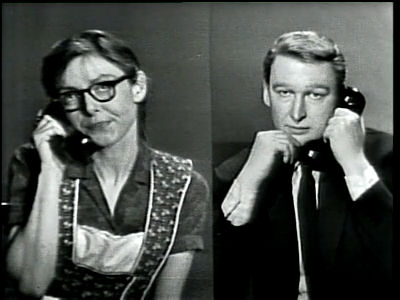
I have an idea for McCarthy.   Back in the 1960s, one of the top comedy teams around was Mike Nichols and Elaine May.  This couple starred on stage and in appearances on network television variety shows.  Their comedy albums were best-sellers.
Nichols and May were smart, inventive, good actors and -- above all -- very funny.
Both went on to become film directors who guided actors to Oscar nominations.  Under his direction, Elizabeth Taylor and Sandy Dennis won Oscars for Who's Afraid of Virginia Woolf?  Dustin Hoffman and Anne Bancroft were Oscar nominees for The Graduate.  Meryl Streep was an Oscar nominee for Mike Nichols' Silkwood and Postcards from the Edge.  Hollywood veteran Eddie Albert and actress Jeannie Berlin got their Oscar nominations for 1972's The Heartbreak Kid, directed by Elaine May.

Elaine May wrote, directed and starred in a 1971 comedy that, I'm so glad to report, has finally made it to DVD.  A New Leaf  co-stars Walter Matthau as a vain, selfish New York City playboy who blew through all his inheritance money pampering himself and living the high life.  Henry is broke and desperate.  He's forced to borrow money.
He has a certain amount of time in which to pay back a sizable loan.  Suicide would be too painful.  He can't do that.  Then one day he sees the solution to all his problems.  She's Henrietta, the klutziest and most socially awkward white woman the Good Lord ever put into a pair of pumps.  She's a botantist.  She's a mess.  She's single.  And she's got money.  She's a rich, single mess.  Henrietta just became beautiful to Henry.
Will the playboy wed her and knock her off for the money?  Can klutzy Henrietta keep from accidentally killing herself by simply walking?  This sweet woman is practically an accident just waiting to happen.  I love A New Leaf.  I could see this being remade with Melissa McCarthy as the loveless botantist who believes she's finally found romance.
Who would I cast opposite her as the playboy with marriage and murder on his mind?
The star of TV's Mad Men -- the handsome Jon Hamm.
He's done some fine dramatic acting as the morally adrift advertising man on that series.  I really dig the way Hamm does comedy.  His guest appearances on 30 Rock and Saturday Night Live broke me up.  And he's funny in Bridesmaids too.  He's perfect to play the over-aged trust fund baby done in by his own sense of entitlement.
Melissa McCarthy is an Emmy winner for her sitcom work on CBS' Mike & Molly.
Last weekend, her comedy movie Identity Theft opened.  One reviewer liked it and referred to her as "a female John Candy."  I felt that was an uninspired compliment, obviously comparing her to the late Candy because he was a plus-sized actor.  McCarthy plays a wife on a hit sitcom, she's good at physical comedy and she also makes movies.  I'd compare her to someone like Lucille Ball.  Or Carol Burnett.  Or Bill Murray -- a comic actor who also graduated from weekly network TV comedy to Oscar-nominated film work.  Melissa McCarthy and Jom Hamm in a remake of Elaine May's A New Leaf -- that's my Hollywood pitch.

You think it's a good one?


Sunday, February 10, 2013

CBS: The Grammys Cover Up

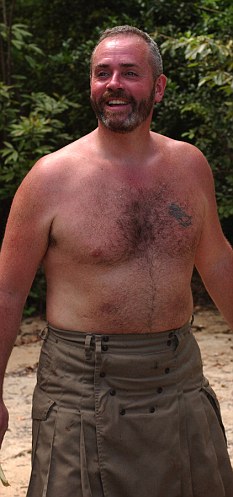
CBS is determined to avoid any "wardrobe malfunction" during tonight's telecast of The Grammys.  Entertainment news has reported the "no breasts, butts or private parts" orders from the network for performers who will be onstage.  That just makes me chuckle.  This is the same network that gave us Richard Hatch on Survivor.  Remember him?
He embraced the "Undress for Success" code and became the big winner.  Millions of TV viewers remember him as the guy who walked around naked on Survivor.  In prime time.
The Ghost of Grammys Past could show us Jennifer Lopez onstage in that dress.
Women have worn more clothing in a doctor's office waiting for a mammogram.  JLo was on CBS.  Remember Howard Stern as Fartman on the Video Music Awards on MTV?
Remember Madonna and Britney Spears during the Video Music Awards on MTV?
MTV and VH1 (where I spent three of the happiest years of my TV career) and CBS are under the same corporate umbrella.  Madonna did go on CBS late night, The David Letterman Show, and dropped the F-bomb a record-breaking number of times in that one sit-down chat.  In March 1994, she got on CBS TV and said "f**k" thirteen times in her guest appearance.  I had a couple of drinks at a club one night with actor Harvey Keitel.  He didn't say the f-word that many times -- and we were drinking Scotch.  This was all before Madonna became British and started writing children's books.
But it wasn't until the Super Bowl Half Time show in 2004 when the tit really hit the fan.  Janet Jackson and Justin Timberlake performed a piece of risky business that was later explained in a term now part of our pop culture-speak:  "wardrobe malfunction."
I thought Conservatives were going to take Janet Jackson out and burn her as a witch.  I have my own personal theory on her whole FCC and CBS drama.  I was, I'm pretty sure, one of the few heterosexually-challenged men in New York City's Chelsea area who kept his TV on to all the CBS pre-game shows and festivities.  At one point, the group of network sports anchors and commentators were making their predictions and what-not. Then one announced that they had a special surprise guest whom they were cutting to for a live interview.  The guest was ... President George W. Bush.  His appearance had not been promoted.  He was a surprise guest and talked about the game.  He also talked about how evil steroid use amongst athletes is -- and the sportscasters praised him for taking a public stand against steroids.  I thought there were bigger things to worry about ... but that's just me.  President Bush told us all he'd be watching the game.

And then comes Janet.  "Miss Jackson...if you're nasty."  I feel that's why it became such a hot issue.  Because President George W. Bush was on CBS live and told us he'd be watching the Super Bowl.  When Janet and Justin did their number, I was watching too.  The scandalous moment happened so quickly, I wasn't quite sure what it was.  Also, I didn't have my glasses on.  I saw this brown thing pop out for a second or two and I thought, "OK...does that mean six more weeks of winter or an early spring?"  Anyway, controversy ensued.  The network that seemed to be pushing us towards edginess was now feeling conservative backlash.  A few days ago, rock stars and actors were ordered to dress for The Grammys as if they're attending that music competition where the Von Trapps sing "Edelweiss" in The Sound of Music.  After years of letting well-paid music stars, movie stars and reality show celebrities act like unruly middle schoolers on national television, getting them to behave now may be as easy as duck hunting with a rake.

So, let's see if anyone tries to crack the new CBS dress code.  Or let's see what cuts of beef Lady Gaga will be wearing.  And let's hope the music is really jammin'.  That's the main reason why I watch.  It's all about the music.


Saturday, February 9, 2013

Overlooked by Oscars: George Gershwin

This is hard to believe.  An American in Paris, directed by Vincente Minnelli, won the Oscar for Best Picture of 1951.  Gene Kelly and Leslie Caron sang and danced to the music of George and Ira Gershwin.  The movie is a great big Technicolor musical bouquet of Gershwin standards and compositions.

George Gershwin wrote for Broadway and Hollywood.  Before his untimely death in 1937, George was nominated only once in the Oscar category for Best Song.  And he lost.
In my previous blog, I mentioned the Rebecca Luker recorded a jazz version of Jerome Kern's "The Folks Who Live on the Hill," a song introduced by Irene Dunne in the film High, Wide and Handsome.  That was eligible to be nominated for Best Song of 1937.  It wasn't.  The Gershwins wrote the score for a new Fred Astaire and Ginger Rogers original musical comedy -- RKO's Shall We Dance.  In it, Astaire introduced the lovely ballad, "They Can't Take That Away From Me." It's my favorite song.
That song earned George Gershwin an Oscar nomination for Best Song of 1937 -- his only Academy Award nomination.  The winner was "Sweet Leilani" from Waikiki Wedding, a Bing Crosby musical comedy.  How many times have you heard a jazz singer do that tune?  Gershwin composed a terrific score for Shall We Dance, the sexiest and one of the best of the Astaire & Rogers RKO original musicals. Rent this DVD.  All those songs, all the ballet music, all the incidental music -- written for this film.  Brilliant.
Besides "They Can't Take That Away From Me," this sleek musical also premiered the song "They All Laughed."  It's Fred and Ginger's first dance together in this movie.
And there's the playful, "Let's Call the Whole Thing Off."  That dance number, an idea of Ginger's, was done on roller skates.  Yes, they made dancing on roller skates look easy.
Those three songs written for Shall We Dance have gone on to become standards in the American Songbook.  And those were only three of the songs written for that film.  There were more.  Astaire and The Gershwins gave moviegoers another musical in 1937.  Fred took a brief break from Ginger.  He made A Damsel in Distress with non-dancer, Joan Fontaine, as his leading lady.  Fred's dear friend, George (middle), gave him more gems.
When Fred and his sister, Adele, were Broadway stars, they had great success in George and Ira Gershwin musicals in the 1920s.  For A Damsel in Distress, George and Ira wrote two snappy numbers for Fred to do with the movie's comic sidekicks, George Burns and Gracie Allen.  The big surprise was how nimble and graceful a dancer Gracie was -- like in the "Stiff Upper Lip" funhouse number.  She's a joy to watch.
The story takes place in London with Astaire playing an American entertainer abroad.  He'll fall for a British lass.  Fred has a solo song, walking in time to the music.  His walk is practically a dance in itself.  The wistful new song he sings walking through British countryside (on a Hollywood backlot) is "A Foggy Day."  It's now a standard.
Fred ends the movie with true love and an absolutely fabulous solo dance number done with drums.  This song Astaire introduces is "Nice Work If You Can Get It."

Not a single song from A Damsel in Distress was nominated for Best Song of 1937.  The winner was still "Sweet Leilani."

Before a brain tumor took his life at age 38, George Gershwin finished writing two numbers with his brother for The Goldwyn Follies that were eligible for Best Song of 1938 Oscar nominations.  But the songs didn't make the cut.  They were "Love Walked In" and "Our Love Is Here To Stay."  The winner was "Thanks for the Memory," introduced by Bob Hope and Shirley Ross in Big Broadcast of 1938.  It would become Hope's signature theme song.

Here's Fred Astaire's recording of "Nice Work If You Can Get It," a George Gershwin tune overlooked by Oscars.  Hard to believe George got just one nomination.  And lost.


Friday, February 8, 2013

Rebecca Luker: She Dunne Good

When singers like Rod Stewart, Diana Krall and Michael Bublé release CDs of standards introduced in Hollywood films, you can always count on them to perform standards in our American Songbook introduced by Fred Astaire, Bing Crosby, Judy Garland, Frank Sinatra and Doris Day.  A couple of big stars who tend to be overlooked are Irene Dunne and Deanna Durbin.  These leading ladies were major stars in the 1930s and '40s.  And they sang.  One person who knows this is also a fine singer -- Broadway star Rebecca Luker.  The Tony Award nominee was delightful with host Terry Gross on National Public Radio's Fresh Air show.  Ms. Luker was a guest on Tuesday to tell us about her new CD and her love for songwriter Jerome Kern.  Added treat?  She sang.

I was really jealous of Terry Gross.  I wish I could've conducted that interview.  Luker sings my late father's favorite song on her new CD, a salute to Jerome Kern.  Kern co-wrote new songs for Fred Astaire musicals.  My favorite is Swing Time, in which Astaire and Ginger Rogers introduced us to "Pick Yourself Up."
Another tune from Swing Time got Hollywood gold.  "The Way You Look Tonight" won the Oscar for Best Song of 1936.  Kern's lyricist for that score was Dorothy Fields.  Astaire and Rogers also starred in the 1935 film version of Broadway's Roberta.  So did Irene Dunne.  In that film, she sang Kern's "Yesterdays" and "Smoke Gets in Your Eyes."  She also sang a new number nominated for Best Song -- Kern's "Lovely To Look At."  Classic film fans today know Dunne as one of the brightest screwball comedy actresses of her day in movies like Theodora Goes Wild, My Favorite Wife and The Awful Truth.
Dunne introduced new Kern tunes penned for the 1936 movie version of Show Boat co-starring Helen Morgan, Paul Robeson and future Oscar-winner Hattie McDaniel.
My favorite new tune is "I Have the Room Above Her," sung with co-star, Allan Jones.
On her Kern CD, Rebecca Luker sings "The Folks Who Live On The Hill."  This was my late dad's favorite song.  It became a favorite with jazz artists and Dad was a jazz fan.  This Jerome Kern song was introduced by Irene Dunne in High, Wide and Handsome, a 1937 Paramount musical love story.  Luker gives the song a swingin' jazz lilt.  She really does it justice.  Dad would've dug it.  Irene Dunne would've dug it.
Irene sang it to Randolph Scott.  He was her leading man in Roberta too.  Lovely Ms. Luker also sings the title tune to a Deanna Durbin original musical comedy for Universal.

Just like Judy Garland, Durbin was a child star in the 1930s who blossomed into a major grown-up movie star in the 1940s.  She was classically trained and added an unforced sexiness to opera selections.  Durbin was one luscious babe with acting skills.  She was a pro at light comedy.  She and Judy did a short feature together as kids at MGM. Garland rose to became the top musical queen at MGM.  Durbin ruled at Universal.
In Can't Help Singing, her only Technicolor musical, she introduced a gorgeous Jerome Kern love song called "More and More."  Oooh, baby, that's a good one!  Written with E.Y. Harburg, it was an Oscar nominee for Best Song of 1945.  Durbin, like Garland, stretched her talents by going dramatic in the mid-1940s.  In Christmas Holiday, she introduced movie-goers to the Frank Loesser song, "Spring Will Be a Little Late This Year."
Her sunny image went to the dark side here.  It's yuletide film noir with Gene Kelly.  He plays a killer she loves.  She winds up singing in a bordello.  Merry Christmas!

Irene Dunne did the role of Magnolia onstage in Show Boat.  So did Rebecca Luker.  I've discovered that music makes a great host or hostess gift when invited to someone's place for a party.  Or it can be a  birthday present.  Keep that tip in mind. And keep I Got Love (Songs of Jerome Kern) in mind.  This Rebecca Luker CD is a gift I'd love to get.

Rebecca Luker is married to fellow Tony Award nominee Danny Burstein.  He's appeared with Louis C.K. on his brilliant FX sitcom, Louie.  We've seen Danny on HBO's Boardwalk Empire and in the 2005 movie TransAmerica.  New York theatre audiences will be lucky enough to see him star in the Roundabout Theatre Company's Broadway revival of Talley's Folly.  The Pulitzer Prize-winning romantic comedy has February previews and opens on March 5th.  Danny got one of his Tony nominations for playing Luther Billis, the WWII sailor always trying to pull a fast one, in the acclaimed Broadway revival of Rodger's & Hammerstein's South Pacific.  Before its successful Lincoln Center run closed, one performance aired on PBS stations.  If your PBS station ever repeats it, make it a "must-see."  He was a younger, sexier, more aggressive and brawnier Billis than we're used to seeing.  (Think of Ray Walston in the 1958 movie version starring Mitzi Gaynor.)
He was also a darker, tougher, complicated Billis.  More human.  Like other characters in South Pacific, he's not just fighting a war on the outside, he's at war with himself on the inside.  Watching Danny in that 2010 Live from Lincoln Center telecast, I had the same feeling I had when I saw John Malkovich play Tom, the brother to Laura Wingfield, in the 1987 TV adaptation of The Glass Menagerie directed by Paul Newman.  I felt, "This is the way the role should've been played all along."  He redefined it.
Enjoy the music.  To hear Rebecca Luker's breezy, warm chat with Terry Gross about her new CD, go the the NPR.org website, click onto the "Programs" section and link into "Fresh Air."


Colman Domingo in RUSTIN

In the first ten minutes of Steven Spielberg's LINCOLN, we see Daniel Day-Lewis as Abraham Lincoln talking to two Black soldiers on a Ci...