A versatile comic actress. We love Betty White! I rarely hear the word "versatile" used to describe her talents, but it does apply. When I was a boy, I watched daytime TV during summer vacations and saw her as a celebrity guest teammate on game shows. Then she showed up as the superficially cheerful, catty and man-hungry TV cook Sue Ann Nivens on THE MARY TYLER MOORE SHOW.
She created a memorable and very funny character in playing that lusty local TV celebrity.
Years later, she played Rose, the lovably innocent and somewhat ditzy member of THE GOLDEN GIRLS. Sue Ann and Rose, two different types of characters.
Betty White played another sitcom that I just loved. CBS should have let that sitcom have a longer life. After Mary Tyler Moore ended the run of her classic sitcom, White moved on to THE BETTY WHITE SHOW on CBS. She played a middle-aged B-actress who is now starring in a cheesy TV cop series called "Undercover Woman." The actress, Joyce Whitman, has a non-star career, a sharp tongue, she needs the work and -- as if that's not enough -- she's working with her ex-husband on the series. There were some really good one-liners on this backstage 1977 sitcom. OK, so it wasn't a classic sitcom like THE MARY TYLER MOORE SHOW. It still made me laugh. Betty was terrific.
Did you see the Oscar winning movie AS GOOD AS IT GETS? That brought a Best Actress Oscar to Helen Hunt and the Best Actor Oscar to Jack Nicholson. The film was an Oscar nominee for Best Picture and Best Screenplay. James L. Brooks wrote the screenplay. He's also the whiz who gave us THE MARY TYLER MOORE SHOW. Shirley Knight, who'd been doing some pretty heavy movie dramatic roles since the 1960s, got to show her sparkling comedy chops playing the loving mother to Helen Hunt's waitress character.
Well...Shirley Knight got the role after Betty White turned it down. Why? Because, in the opening minutes of the story, Nicholson's cranky New York City character takes a hyper little dog that's bothering him and puts it down his apartment building trash chute. The dog was unharmed. BUT...we know how much Betty loves animals.
She loves animals as much as we love her. We wish a most marvelous and very happy 95th birthday to the beloved Betty White.
I've got a question for you younger gay guys who adore and still pledge devotion to THE GOLDEN GIRLS thanks to TV reruns and trivia books about the show. We watched --- and still watch -- those dear friends and fabulous female characters. They were of retirement age.
If there were 3 or 4 gay gentlemen of similar ages as THE GOLDEN GIRLS and they lived together in your vicinity and they would absolutely appreciate company occasionally for cheesecake and chat, would you go over and visit them?
I ask because I hear and see the love from male gay community members for THE GOLDEN GIRLS...then I hear remarks like "Ohmygod, he's over 50" or "Some old guy tried to talk me up at the bar." None of us is getting any younger.
Would you give 3 or 4 sweet gay senior males living together that same time, attention and affection you give THE GOLDEN GIRLS? Would they thank you for being a friend? I'm curious. I'm interested in how the gay males treat aging within their own community.
I hope that, next week, this actor hears his name announced in the list of Oscar nominees. Last year was a great one for Mahershala Ali and a great one for us moviegoers who got to see his work. He gave a rich, beautiful, touching performance in MOONLIGHT. He plays Juan, the tough black/Latino drug dealer in Florida who lets his sweet paternal spirit float to the surface when he meets a troubled, lonely, fatherless youth who's been bullied with homophobic remarks.
Juan becomes a kind father figure to the boy. They're both outsiders in society.
Months before MOONLIGHT came out, Mahershala Ali was seen -- by some -- in FREE STATE OF JONES. This Civil War drama, based on a true story, died a quick death in the battle of the box office. Matthew McConaughey was the star. He played a Confederate deserter who hates the war, hates the idea of slavery, returns to Mississippi and challenges inequality with some runaway slaves on his side.
The movie was only so-so but there was one standout performance, as far as I was concerned. And it wasn't from the star of the movie. It came from a supporting actor. I'd recognized him immediately from the cast of the hit Netflix TV series, HOUSE OF CARDS starring Kevin Spacey as a ruthless politician in Washington DC. In FREE STATE OF JONES, Mr. Ali played Moses, a runaway slave who wants freedom and equal rights for himself and his people.
Here's a clip from FREE STATE OF JONES.
FREE STATE OF JONES didn't bring a noticeable population to movie theaters. Fortunately, the same cannot be said about MOONLIGHT. Critics loved it. Moviegoers are loving it. Next week, we'll see if the Academy loves it and gives it Oscar nominations. Here's a clip.
It's Sunday afternoon. According to The Hollywood Reporter and The Los Angeles Times, the movie HIDDEN FIGURES finished first at the box office. That's the uplifting true story of the three African American woman on the NASA team who helped launch astronaut John Glenn into space in the early 1960s. By the way, Mahershala Ali is in that movie too. It's another film that could score an Oscar nomination next week.
For a few months, I've spending time with my sister in the Twin Cities. On the Fox affiliate in Minneapolis, there's a low-budget but highly entertaining live weekday morning program called THE JASON SHOW.
Jason Matheson, the Fox9 host, presents taped and occasionally live celebrity interviews. Several of the live celebrity interviews I've seen were conducted via satellite with the star seated in a bigger city. Mahershala Ali won awards from critics for MOONLIGHT and started making the rounds on network morning news programs. He did a satellite interview for THE JASON SHOW. I saw it. What impressed me the most was how warm, humble and appreciative the actor was. He gave that interview for a local Minneapolis morning show the same energy and enthusiasm he gave GOOD MORNING AMERICA and CBS THIS MORNING. Believe me, not all celebrities do that when granting time to, shall we say, smaller markets.
What a class act he is. And what a remarkable actor too.
Again, I hope Mahershala Ali hears his name announced next week as a Best Supporting Actor Oscar nominee.
When I was growing up in South Los Angeles, I had a crush on Debbie Reynolds that started when I was in grade school. One weekend afternoon, while my mother was trying to get stuff done around the house, I was way too energetic and focused my energy on her. I was working her last good nerve. To get me out of her hair, she sat me down with a snack on front of the TV. She turned to Channel 9, then called KHJ, and a "Million Dollar Movie" matinee was about to begin. SUSAN SLEPT HERE starring Debbie Reynolds was the feature. Mom said, "Here. Watch Debbie Reynolds." There was 1954 Debbie Reynolds, at a peak of her 20-something cuteness, playing the prettiest juvenile delinquent ever. She had a ponytail, she was wearing blue jeans, and she was kicking two middle-aged cops on Christmas Eve. As the cops dragged Susan into the apartment of a Hollywood screenwriter who'd become her temporary guardian, she let out such a piercing scream that it burst one of the bulbs on his Christmas tree.
She was my kind o' girl. And then when she used the screenwriter's Oscar as a nutcracker. Well...my little grade school heart took wing.
When I saw her on TV in SINGIN' IN THE RAIN, I knew that I wanted to grow up and marry her.
Debbie Reynolds had a dedicated fan in my mother too. Mom saw her as a tireless entertainer who was a fellow working mom, often a single working mom. As for Carrie, I fell in love with her ne special night in Milwaukee. That's the city where I attended college and began my professional broadcast career. During my first broadcast job out of college, I was a local radio station news reporter. I got a pass to a preview screening of a new movie called STAR WARS. There was Debbie's daughter as Princess Leia. I loved her. So did everyone else in that packed movie theater.
I still cannot believe that I had a national TV talk show and two of my all-time favorite guests were Carrie Fisher and, later, Debbie Reynolds. When Carrie entered the studio and when Debbie entered the studio, there was a delicious breeze of warmth and wit. They made us laugh. They were playful. Both hung around after they taped my show to pose for photos and chat. Not all celebrities did that. Carrie Fisher and Debbie Reynolds made a direct hit on hearts and stayed there. When Carrie was on my show, you knew how special her mother was to her. When Debbie was on, you knew how special Carrie was to her.
When they both died, we all felt as it we'd lost two beloved friends of the family. In their relationship, we could see ourselves reflected or see a dream version of ourselves. We could see family friction in youth that faded and lead to fierce family devotion. They died during the holiday season, after Christmas and before New Year's Eve. Starting with Thanksgiving, America focuses on how to get through a dysfunctional family gathering for a meal. Let's face it. Millions of us probably have that one immediate relative who treats us more like a casual, low-priority acquaintance than a close relative. That breaks our hearts. But in the story of Carrie Fisher and Debbie Reynolds, we see a family love and devotion so close that it shattered a certain Hollywood family stereotype in all the years that followed the publication of MOMMIE DEAREST.
You can see that tender, tight mother/daughter bond for yourself in BRIGHT LIGHTS, a documentary on Carrie Fisher and Debbie Reynolds that airs on HBO. You will laugh. You will cry. You will miss them. I heard about this documentary months ago when it had screened at film festivals. It was seeking a distributor. With the sudden passing of both stars, it found a place to air.
As Carrie says in the documentary, Hollywood didn't exactly "lavish her with awards" when talking about her mother. They were on their way to the Screen Actors Guild awards just a year ago when Debbie was given the SAG lifetime achievement award. And a well-deserved one it was. Debbie and Carrie were onstage together for the acceptance and, as always, they made us laugh. Just a year ago. Hollywood, around that same time, gave Debbie a special Oscar. She was ill and couldn't attend that ceremony.
Over the last few years, I've written blog pieces expressing how I felt Hollywood dropped the ball on showing appreciation for Debbie Reynolds and Carrie Fisher. Debbie had the reputation for being one of the hardest working women in show business for decades. She was our connection to the Golden Age of Hollywood. Under contract to MGM during its final years as the Tiffany studio of movie musicals, she became a star with her lead role in 1952's SINGIN' IN THE RAIN. She got a Best Actress Oscar nomination for MGM's deluxe musical, 1964's THE UNSINKABLE MOLLY BROWN. She lost to Julie Andrews for MARY POPPINS, Andrews' film debut. I've often said that Debbie Reynolds, up for Hollywood gold for that performance, should've received an Olympics gold medal. The "He's My Friend" number in that movie was a triathlon with a downbeat. She acts, sings and dances -- in high heels, high hair and an evening gown. Look.
Debbie had to fight for that part in MGM's film version of a hit Broadway musical. Shirley MacLaine was also a guest on my old VH1 talk show in the late 80s and we talked about it. Shirley was slated to do the film. There was a contract snag. Shirley told me that Debbie contacted her and honestly said why she wanted the role. She felt that Shirley would go on to other good roles, but the era of the Hollywood musicals was ending. Debbie sensed this would be her last chance at a big, first class Hollywood musical. Shirley did go on to other good roles, roles that brought her Oscar nominations with one victory. She won Best Actress for the mother/daughter tearjerker TERMS OF ENDEARMENT. Shirley laughed in our VH1 interview and added that it was "karma" she was in rehearsals at that time for a role that Debbie wanted. The role was Hollywood mom Doris Mann in POSTCARDS FROM THE EDGE with a screenplay by Carrie Fisher based on Carrie's first novel.
The Oscar nomination Debbie Reynolds got for THE UNSINKABLE MOLLY BROWN was the only one she received. I said in my network TV film review that she deserved to get one for her terrific comedy/drama character role performance in Albert Brook's MOTHER. She got raves from critics for that 1996 film. But she did not get an Oscar nomination.
I often got the feeling that Hollywood took Debbie and Carrie for granted. Have you seen POSTCARDS FROM THE EDGE? Carrie wrote Meryl Streep to another Best Actress nomination. If you've read the novel, you'll agree that Carrie should've been nominated for Best Screenplay. Keeping the same characters from the novel, it's a different look at the same story. Brilliant dialogue. Memorable scenes. In the book, Suzanne's grandmother is the relative we hear from the most. Doris, her mother, is in less than 10 pages. Carrie went deeper into her own relationship with Debbie for the screenplay. The celebrated staircase argument scene in the movie ("It twirled up!") is not in the book at all.
But Quentin Tarantino won a Best Original Screenplay Oscar for 2012's DJANGO UNCHAINED even though his film was inspired by 1966 foreign western called DJANGO. Tarantino's film had a cameo appearance by Franco Nero, the star of 1966's DJANGO. Go figure.
With Carrie's talent as a screenwriter and a novelist coupled with her lead actress work in the original STAR WARS trilogy, three box office blockbusters that are truly iconic all over the world, she never got a star on the Hollywood Walk of Fame.
As for Debbie, she dynamically and selflessly toiled for years and years to preserve Hollywood history starting at a time when shoe salesmen were becoming studio heads. She often went broke collecting classic Hollywood costumes from classic films. But the Hollywood that would give $20 million to Adam Sandler to make another shitty comedy would not help Debbie with her Hollywood memorabilia museum. In the early, dark days of the AIDS crisis, there were two Hollywood female stars who jumped right in to help and raise money -- Elizabeth Taylor and Debbie Reynolds. Debbie didn't get the headlines that Elizabeth did, but she was there onstage entertaining at AIDS benefits when our government was doing nothing.
Hollywood should have given Debbie Reynolds a special Oscar around the time MOTHER was released. She was Hollywood royalty. Debbie was a Hollywood star who showed her musical comedy and dramatic talents over the years in films such as SINGIN' IN THE RAIN, THE TENDER TRAP, A CATERED AFFAIR, THE RAT RACE, THE PLEASURE OF HIS COMPANY, TAMMY AND THE BACHELOR, HOW THE WEST WAS WON, THE UNSINKABLE MOLLY BROWN, WHAT'S THE MATTER WITH HELEN?, DIVORCE AMERICAN STYLE and MOTHER.
But, years before Debbie got one, the Academy gave a special Oscar to Oprah Winfrey whose global success came from daytime TV. Nothing against Oprah, but Debbie was a movie star before Oprah was born.
You'll see the side of Debbie Reynolds that her professionalism kept hidden. You see her older, growing infirm and slowing down. You see Carrie being protective of her mother's image. The behind the scenes section at the SAG awards show will touch your heart. Check your listings or go to HBO.com and look for upcoming repeats of BRIGHT LIGHTS. I'm so grateful to HBO for showing it. The whole documentary makes you love Debbie Reynolds and Carrie Fisher even more. They were two bright lights -- and I wonder if Hollywood truly appreciated how radiant and colorful those lights were.
If Debbie Reynolds and Carrie Fisher had played an extremely close mother and daughter in a movie like TERMS OF ENDEARMENT and if the movie ended with the daughter dying unexpectedly and the mother also dying unexpectedly the following day, critics would have snarked that it was a sappy, sentimental and totally unbelievable ending. But those deaths happened in real life.
"You're under arrest, Sugar." Baby boomers who were kids in those days can still quote her weekly line on that groundbreaking cop series. Born on this day in history: The late Teresa Graves. No one talks about her today, but she was stellar on TV. The camera loved her. What was there not to love?
TV viewers -- especially those of us in the black community -- fell in love with Teresa Graves when she was added to the cast of NBC's extremely popular comedy sketch/variety show, LAUGH-IN. That was in the late 1960s to early 70s. She could sing and she had a flair for comedy.
There's Teresa Graves on the left next to future Best Supporting Actress Oscar winner and fellow LAUGH-IN cast member, Goldie Hawn. Anybody who was anybody in show biz, past or present, wanted to do a cameo appearance on LAUGH-IN. Even Republican presidential candidate Richard M. Nixon did a cameo comedy bit on LAUGH-IN to boost his popularity. He won the election. Then he resigned from office because of the Watergate scandal.
As for Teresa Graves, she made racial and gender history on ABC. In 1974, she starred on the new series GET CHRISTIE LOVE! Not only was she one of the first African American actresses to be the star of a prime time network drama series, she was playing an undercover cop who was the lead character. In September 1974, NBC came out with Angie Dickinson as POLICE WOMAN. In January 1974, GET CHRISTIE LOVE! was an ABC Movie of the Week. It became a series in September.
That means Christie Love was on the undercover cop beat before POLICE WOMAN, thanks to the ABC Movie of the Week. (Man, how I wish that original programming format would be revived by ABC! It helped launch careers of new actors like Sally Field, James Caan, Billy Dee Williams, Stockard Channing and Martin Sheen plus young new directors like Steven Spielberg.)
GET CHRISTIE LOVE!, just like ABC's 1965 series HONEY WEST starring Anne Francis, was a drama/action series featuring a woman in the lead role as a non-comic book crimefighter. Anne Francis played a hip, smart private eye who ran her own business. The female private eye story is a TV and film genre just waiting to be tapped. Both HONEY WEST and GET CHRISTIE LOVE! had short runs. Each lasted just one year compared to the long run of POLICE WOMAN. But, during their short runs, both those ABC shows were very popular with young viewers and the network should've kept the shows on longer than they did.
Another word about HONEY WEST: Like Christie, she was cool. Honey knew karate, she could handle a gun, she drove a convertible and she had a pet ocelot.
In the late 1980s, during my years as a VH1 daily veejay and talk show host, a buddy of mine who worked for a Hollywood studio told me that his company was eager to do movie versions of properties already known to TV audiences. I suggested his company star Michelle Pfeiffer in a film version of HONEY WEST and write in a nice guest star role for Anne Francis. But did Hollywood listen to me? No. In today's age of the TV reboot, maybe GET CHRISTIE LOVE! should get some consideration. Here's an opening of the show.
I don't know much about the lovely and very talented Teresa Graves after the cancellation of this hour-long cop series. I wish there had been another network TV project for the singer/actress. Reportedly, she retired for show business in the early 1980s and concentrated on religious and social awareness issues. Sadly, Teresa Graves was the victim of a pre-dawn house fire in Inglewood, California and died in 2002. She was only 54.
A few days ago, I went to see FENCES. It was worth every single penny I spent on that New York City cineplex ticket. A few critics have written that this film adaptation of the Pulitzer Prize winning play by African America playwright August Wilson feels "stagey" and shows its theatrical roots. Well, frankly, you can tell it was originally a stage vehicle. The late August Wilson wrote the screenplay. Initially, FENCES was slated to be a presentation on HBO. The FENCES project, to be directed by Denzel Washington who starred in the Broadway revival with Viola Davis, got upgraded to theatrical release. Wilson won two Pulitzer for plays and it took over 20 years for either one of those plays to hit the big screen. I'm cool with the film FENCES showing some theatrical roots. I'm cool with it as a black American who's proud the work of August Wilson has finally made it to the big screen like the works of Tennessee Williams, Arthur Miller, Edward Albee and Neil Simon -- other playwrights who won Pulitzer Prizes and saw their award-winning plays turned into films. I'm cool with it because of the magnificent performance delivered by Viola Davis under the direction of Denzel Washington. Her power, her depth, her acting brilliance take your breath away.
Let's be real: One of the big blocks on the FENCES road from Broadway to Hollywood was race. Wilson wanted a black director to helm the project. At one time, Eddie Murphy was mentioned to play the son in Wilson's working class family drama. That's because Murphy had hit comedies under his belt and Hollywood, which didn't think black actors were "marketable," wanted a name to assure box office. White director Norman Jewison mentioned this very thing in talking about his film adaptation of A SOLDIER'S STORY, another Pulitzer Prize winning work written by an African American playwright. Jewison, whose IN THE HEAT OF THE NIGHT won the Oscar for Best Picture of 1967, revealed the hard time he had getting A SOLDIER'S STORY to the screen because no major studio wanted to do it. Why? Because it was "a black story" with a predominantly black cast. A cast that included screen newcomer, Denzel Washington, by the way. Jewison offered to take less money than his usual director's fee to get it done. His film got an Oscar nomination for Best Picture of 1984.
I saw the original production of FENCES on Broadway in the late 80s. It starred James Earl Jones as the strict, complex family man in the Pittsburgh of the 1950s. Jones' performance was great. He gave you goosepimples. We gave him a thunderous standing ovation. If Hollywood had not been so racially narrow-minded, FENCES should have been on the big screen in the early 90s with James Earl Jones and Ruby Dee. Ruby Dee would be so proud of Viola Davis' performance today.
Viola Davis, who has done works of August Wilson on stage, gives the role of the wife a warm and easy sexuality that I didn't see in the original Broadway production. Her Rose has been married to Troy for 18 years and you can tell that she still loves making love with him. In Davis' performance, you see that her Rose said "I do" and was in for the long run. You feel that, before Troy came along, her life was a subject in search of a verb. Her life as a wife and mother is not a trouble-free one. Racial discrimination took a toll on Troy's talents and dreams. But that suburban life with him is the one she wants. And then, just like that, something changes her life.
Trust me. That one strong scene clip you just saw is not the only strong scene Viola Davis has in FENCES. Her realness put tears in my eyes. I saw some of my mother in Davis' portrayal of Rose. I saw some of my late father in Denzel Washington's performance as Troy.
Give Viola Davis an Oscar nomination right now for FENCES. This week, the star of ABC's HOW TO GET AWAY WITH MURDER got a star on the Hollywood Walk of Fame. She deserves it. She also deserves an Oscar.
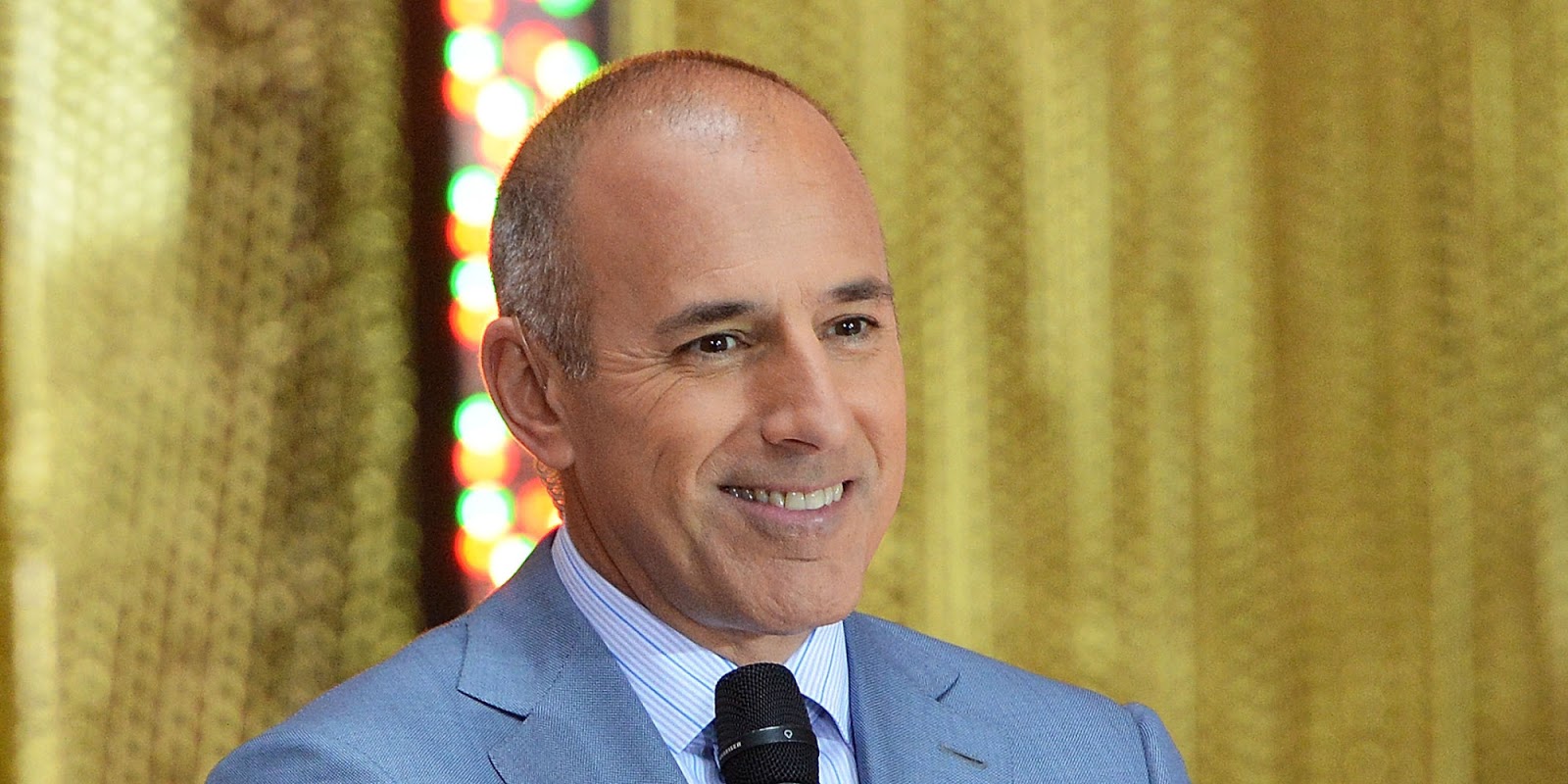
I knew that post title would get your attention. TV has changed. Society has changed. But, from what I saw this morning on NBC's TODAY Show, one thing has not changed. That is -- Matt Lauer has pretty much remained a true gent in a profession that can sometimes change people in an unflattering way. This morning, January 6th, TODAY celebrated Matt Lauer's 20th anniversary as co-host on the program.
Let me tell you about the brief time I got to work with Matt on the air. Talk about how society and TV have changed, Matt and I worked together in days when a black president of the United States was usually the punchline of a comedy movie script and openly gay actors and news anchors working on network TV was totally unheard of. Matt Lauer was as absolute sweetheart to me in 1992 during my bumpy start at WNBC TV.
Note: For you who know me, forgive my reposting video you've already seen. I'm doing it for the new folks coming to my blogsite.
Matt Lauer and I share a TV credit. We both worked on editions of PM MAGAZINE, a syndicated weeknight entertainment and lifestyles show that was popular in the 1980s. He was a co-host in New York City, I believe. I was a weekly contributor/writer on the Milwaukee edition for that city's ABC affiliate. I'd fly to New York and L.A. to do celebrity interviews and PM MAGAZINE gave me the first major lift of my early TV career. My interviews of Sally Field, Meryl Streep, Jessica Lange, Ben Kingsley, Dolly Parton and others aired nationally. That made me the first African American male to be seen doing celebrity interviews nationally on PM MAGAZINE and that work helped me get a New York City local TV job offer in 1985. I did two years on local TV in New York City and then I had three fantastic years on VH1. This is backstory to keep in mind. After my VH1 years, one gig I had was as host of a syndicated summer replacement nighttime game show. In New York, the game show aired on the local Fox affiliate. During its run, I got contacted to meet with a WNBC news exec about being on an upcoming new project. That new local show would premiere in September 1992 and would be called WEEKEND TODAY IN NEW YORK.
The syndicated game show I'd hosted did not get a green light for more episodes. The WNBC job offer appealed to me because, initially, I was offered the opportunity to do entertainment news, interviews and film reviews. THAT really appealed to me because black people were never seen as weekly film critics on TV news programs or syndicated film review shows. When I was on VH1 in the late 80s, I got a rave review in The New York Times for my prime time talk show. I was the first black person to get his own celebrity talk show on VH1. Here's a demo reel:
In 1992, Matt Lauer was new on WNBC local news -- and one of the hardest working people on local TV. He'd co-anchor the early morning WNBC newscast, the afternoon newscast and he'd often do the evening newscast with Sue Simmons. I think the station just put a cot next to the men's room on the studio floor for Matt so he wouldn't have to go to his apartment. That's how much time he put in at WNBC news. Matt was also assigned to be co-host/anchor of WEEKEND TODAY IN NEW YORK, a show that would begin airing at 6am on a Saturday morning.
I took the WNBC offer for the new local weekend live morning news show. CBS and ABC did not have local weekend news programs at that time. The local industry buzz was that our show would last no longer than six months. This show is still on the air. Not only that, it became such a hit that local ABC and CBS launched their own local weekend morning news shows.
We premiered at a time when race and sexual diversity had yet to be embraced widely on TV. America was in the grips of the AIDS epidemic. ACT UP was in the news with its gay activism protests. Next week, the TODAY Show celebrates its 65th anniversary. I admit that one reason why I took the WNBC local job was that I wanted to move up within the company and do celebrity interview segments for the NBC network edition of WEEKEND TODAY.
In its first 50 years, TODAY had only two black people as talent on the show. Bryant Gumble and Al Roker were the only two African American talents seen on TODAY in its first half century on the air. It premiered in 1952. Those two talented men were not the only two black people who wanted to work on TODAY in its first 50 years. Believe me.
The afternoon before WEEKEND TODAY IN NEW YORK premiered, I was told that I would not cover entertainment on the show. No celebrity interviews, no entertainment news, no film reviews. Instead, I would do funny outdoor liveshots and a segment called "Bobby's Best Bets." That was a "things to do around time" list of items lifted from New York Magazine. Basically, it was a "Community Calendar" segment. My thought was -- "Y'all got to be jokin'. WHAT?!?!?!"
One of the show's producers said she didn't think I had "the skills" to cover entertainment. Another WNBC newsroom employee thought I was an intern. Of course, I wanted to scream "What is wrong with you white people?!?!?" But, what I discovered was that none of them had ever watched my demo reel or read my resumé. They were unaware of my TV experience. A few newsroom people thought the WNBC gig was my first TV job. However, Adam Sandler and Ellen Cleghorne, then with SATURDAY NIGHT LIVE, would see me in the building and asked "Why aren't in the studio doing the celebrity interviews like you did on VH1? Why are you at shopping malls?"
I was angry. I was humiliated. But I did the work. In the short time we worked together on the show, before his ascent to network morning stardom, Matt Lauer would compliment on my work and take a moment or two to talk to me. He always made me feel significant. He was aware of my previous work. He pushed for me to do what I do best on the weekday newscasts. He wasn't successful in that push, but I did see him enthusiastically pitch me to the weekday newscast producers.
In October or November 1992, I had to do a liveshot in Manhattan's Union Square. It was to promote the non-profit organization www.newyorkcares.org. While I was on live, Matt Lauer arrived for a segment. My cameraman was giggling because he could see Matt sneaking up behind me. But I couldn't. Matt did sneak up...and he kissed me on the cheek on live TV. I have not washed that cheek since. Thousands and thousands of women and gay men were so jealous of me that morning. Thank you, thank you, thank you, Matt Lauer.
Matt was replaced on our weekend show only because he was overworked on WNBC local -- and he was readied for a network upgrade.
I did eventually get to do occasional celebrity interviews on WEEKEND TODAY IN NEW YORK...after I pushed and pushed and pushed. I was still assigned the "Go out there and be funny" live outdoor segments. During my time on the show, my one-year contract expired. I was not offered another contract but I was told that my work was very good and I was so popular with viewers that I was kept on that Saturday and Sunday show.
A week before Christmas 1992, my boyfriend was diagnosed with full-blown AIDS. He'd been laid off from a good longtime job a month before and was looking for work. Then came the diagnosis. Then his roommate asked him to move out because of the diagnosis. I became his primary caregiver in New York City and he moved in with me into my humble studio apartment. He died in June 1994. A few WNBC newsroom employees I trusted pulled me aside and urged me not to be "an angry black man" despite how management treated me and not to tell anyone that my partner had AIDS, even though my health was good. They felt that if news of my personal life was revealed, management might not need me on the show anymore -- and my income from that weekend show helped me take care of my terminally ill partner. If I had been made to feel comfortable about being *out* and sharing my story, I would have loved doing pieces to share what I'd learned about caregiving and helping someone with AIDS. In those days, I was surely not the only person going through that experience. But I was told to keep quiet for fear of being unemployed. And I did not have an agent to help me get other work. There were so many times that I slept sitting up in a chair at Richard's Mt. Sinai Hospital bedside, woke up, took a shower in his hospital room and caught took a cab to 30 Rock to be at work by 4:30am so I could be funny on a live news program.
Another thing: I was told by the local news boss that, even though my work and popularity were both good, I would not be offered another contract, I would not be getting spots on the weekday local newscast and I would not be moving up to network exposure. But he wanted me to stay with WEEKEND TODAY IN NEW YORK.
I stayed long enough to make the money to help my late partner's family down South pay off his funeral expenses in full...and then I quit. That was in January 1995. That particular WNBC management team, by the way, has been long gone.
I will never forget Matt Lauer's kindness to me when we worked together in 30 Rock. I needed kindness then. Happy Anniversary, Matt.
I love musicals. I have for most of my life. LA LA LAND, a musical love story, got such rave reviews that I just couldn't wait to see it. Well, I saw it. Let me put it to you like this: LA LA LAND is like a big, pretty Christmas gift box with a bow on top. You open it to find it's full of brightly colored sheets of tissue paper. And that's all. Two of my favorite young actors, Ryan Gosling and Emma Stone, are the stars. She plays Mia, the aspiring young actress in L.A. Mia works in a coffee shop. He's a jazz pianist struggling to make ends meet. Their first encounter has a slight conflict and some misunderstanding. But, like in the Fred Astaire & Ginger Rogers musicals at RKO or the Gene Kelly & Judy Garland musicals at MGM, you know that they will eventually fall in love and dance together.
Sebastian (Gosling) loves jazz. He loves the masters like Miles Davis, Charlie Parker and Hoagy Carmichael. Mia doesn't. She says, "I hate jazz." Then she talks about Kenny G.
Seb and Mia fall for each other. When she gives up after several career disappointments and leaves L.A., he urges her to not give up on her dreams and try one more audition. And that's pretty much the plot. Critics fell head over heels in love with this movie and, in their reviews, mentioned classic movie musicals like SINGIN' IN THE RAIN, THE BAND WAGON starring Fred Astaire, and the pastel-colored, exquisitely bittersweet French musical drama from the 1964, THE UMBRELLAS OF CHERBOURGH. Those three musicals all have way better screenplays than LA LA LAND does. They have more substance, more wit. And that's my big criticism of LA LA LAND. The actors were fine. The screenplay is mediocre. The screenplay was written by its director, Damien Chazelle, a filmmaker born in the mid 80s. He missed not only the Golden Age of Hollywood Musicals, he was in diapers during the Golden Age of music videos, a good number of which copied business from classic movie musical numbers. Think of Madonna's "Material Girl"video in which she imitated Marilyn Monroe's "Diamonds Are A Girl's Best Friend" number from GENTLEMEN PREFER BLONDES. Damien Chazelle watched classic musicals but did he learn about the vision of their directors -- directors like Vincente Minnelli, Gene Kelly and Stanley Donen? And I don't mean just their vision through the camera lens. Did he learn about tone, pacing, the power of a clever screenplay and the use of musical numbers to reveal character and advance the storyline? That kind of vision. LA LA LAND is tasty eye candy. Chazelle frequently used what I call a Minnelli Red in LA LA LAND. Think of the red when first we see Cyd Charisse as the hot new ballet star in THE BAND WAGON. Then think of the red dress when she dances as the vamp with Fred Astaire in THE BAND WAGON's famous "Girl Hunt" jazz ballet.
Look at the red in Gigi's home in GIGI. In LA LA LAND's final musical number, there's set decoration influence from SINGIN' IN THE RAIN's "Broadway Rhythm" number.
Mia is handed balloons as she's being made up -- like Audrey Hepburn as the new fashion model in Stanley Donen's FUNNY FACE with Hepburn and Fred Astaire. LA LA LAND's story takes place in seasons, just like Minnelli's classic MEET ME IN ST. LOUIS. We see a screen card that says "Spring," "Winter" and so on. Here's how Minnelli did it.
LA LA LAND opens with a fabulous number on a Los Angeles freeway. Folks sing and dance out of their non-moving vehicles. It's entertaining but it doesn't reveal anything about a lead character or lead characters. Think of "The Jet Song" in WEST SIDE STORY, Judy Garland's "Over the Rainbow" in THE WIZARD OF OZ and her "The Boy Next Door" in MEET ME IN ST. LOUIS. Look at Astaire and Rogers singing and dancing "Pick Yourself Up" in SWING TIME. The freeway song, like all of the score, is pleasant. The whole zesty number just seems to be there for the sake of being there. Neither Stone nor Gosling are in that opening number.
Here's the one thing that REALLY annoyed me about LA LA LAND. The disrespect for jazz. Sebastian's sister in the opening scenes comes off like a great granddaughter of the Lauren Bacall character in 1950's YOUNG MAN WITH A HORN starring Kirk Douglas. Douglas played the horn player who loved and learned from black jazz greats. Bacall was the wife who could've cared less about that music. There's a LA LA LAND scene in which Sebastian explains the history of jazz to Mia while they're in a club. A black jazz trio performs onstage. At no time in his brief history lesson does Sebastian mention black people. If I had the money, I would ship the Ken Burns JAZZ mini-series documentary that aired on PBS to the screenwriter/director. As for the scene itself...well, there's nothin' like having a young white dude explain an African American art form in about 30 seconds. With no mention African Americans.
Then comes John Legend as a guy who can get Sebastian some steady employment. But he doesn't seem to have any reverence for the old jazz masters either. He tells Seb that he's living in the past with the music he loves. It's old stuff. Why would a film director give a young black musician/songwriter that material to say about an American music art form started by black people? Legend's character wants Seb to play more contemporary stuff. At the open of the film, Seb is fired from his restaurant/lounge piano player job for playing jazz. Seb's sister doesn't care for jazz, his boss forbids jazz to be played and Mia hates jazz. Then John Legend's character casually disrespects jazz. I would've given Legend dialogue like: "You are keeping the memory of these jazz greats alive. Jazz. My people created the foundation for jazz. They built the house on top of that foundation with an open door so folks of all colors could come in, enjoy, go out and build their own new material with what they learned from and loved about the masters of the music. That's what I need you to do, Seb. Build some new material inspired by that old house you loved being in." See what I mean?
But there are some precious things about LA LA LAND. The lead actors are likable and there's the lovely use of actual L.A. locations. Here's a taste of LA LA LAND with an influence of the Michel Legrand music for THE UMBRELLAS OF CHERBOURG.
Here's a number I'd like you to see from 1953. In THE BAND WAGON, Fred Astaire and Cyd Charisse play dancers of different styles and different eras who are cast as the leads in a new Broadway musical. In rehearsals, they argue. But, as they open up to each other and take a walk through Central Park, they discover that their styles can blend -- professionally and romantically. Here's Fred Astaire (then in his early 50s) and Cyd Charisse in the "Dancing in the Dark" number from Vincente Minnelli's THE BAND WAGON. Watch it ...and then let's talk about great musicals with great musical talent.
LA LA LAND really cooks in the third act when Mia is absolutely fed up after a humiliating one-woman show she writes and performs. Gosling is good. However, they didn't really have much to play. The biggest challenge for them was the musical numbers. I'd suggest this -- see LA LA LAND and then watch the musical comedy classic, SINGIN' IN THE RAIN starring Gene Kelly, Debbie Reynolds and Donald O'Connor. Both stories are set in L.A. and both focus on people in show biz. 1952's SINGIN' IN THE RAIN had characters dealing with new technology. Hollywood's silent film era of the 1920s was ending quickly because of sound. This new technology will revolutionize the entire movie-making industry. LA LA LAND benefits from today's new technology. You see the special effects in the dance numbers. However, with the advantages of today's technology, notice which one of those two movie musicals has the more sparkling script and -- let's face it -- the more memorable dance numbers. To me, LA LA LAND often felt like a colorful, original made-for-TV musical. If I had to grade LA LA LAND, I would give it a C+.