This is post is about a lovely, brief moment I have in New York City with actor/director Kenneth Branagh one night. It's also an appreciation for the racial inclusivity he's long displayed in his filmmaking.
My article is also a reminder of why I'm so passionate about racial inclusion within the groups of arts critics -- film critics and theatre critics. If the field is predominantly white male, as the field of film critics on national TV has been for decades -- key elements will be missed or ignored. Race and gender inclusion in the critical conversation about the film arts, I believe, ultimately can be helpful to the filmmakers in their future work. Let me give you a couple of examples before I tell you about Branagh's new work. Tom Doherty is one of the film journalists I follow on Twitter. He teaches at Brandeis University. He was excellent on-camera giving historical observations in this year's PBS documentary about Mae West entitled DIRTY BLONDE. He's a white male. This week on Twitter, he wrote that he watched Quentin Tarantino's fine film, ONCE UPON A TIME IN HOLLYWOOD, for the fifth time. Doherty noticed something he had never noticed in his previous viewings. He noticed an "attention-to-period detail" in the long-barreled Buntline revolver brandished by the home invaders associated with Charles Manson.
I didn't notice that. What I noticed was the lack of Black people as pedestrians on Hollywood Blvd. I grew up in South Central L.A. I still vividly recall listening to KMPC radio when the bulletin broke about the Sharon Tate murder in August 1969. I was teen-ager and I spent many summer afternoons on Hollywood Blvd taking in a movie, hitting record stores to buy new albums or browsing in bookstores that had well-stocked movie sections. I was not the only Black person walking up and down Hollywood Blvd or sitting at one of its bus stops to start my RTD ride back home. I attended a parochial all-boys high school in Watts. The student body was mostly African American followed by Mexican American. Our English Lit. class went on a field trip. The school took advantage of the student ticket group rates discounts offered by movie theaters. We all got on the bus, with our teacher, and went to Hollywood to see Franco Zeffirelli's ROMEO AND JULIET. The pic above is from Tarantino's film. That's right. Black and Chicano dudes, some with Afros like Linc's on THE MOD SQUAD, headed into a Hollywood movie theater to see a new film adaptation of a famous Shakespearian tragedy. With the late 1960s movie and music scene, there was plenty of Black youth on Hollywood Blvd. If I had been a film critic on TV reviewing Tarantino's film, I would have mentioned that. There are many Black and Latino members of Screen Actors Guild who could've worked as background actors in those scenes. I know. I'm a SAG member. I've worked as a background actor in a few movies.
Critics raved about the Coen Bros. 2013 film, INSIDE LLEWYN DAVIS. The drama focused on a week in the life of a young singer trying to make it in the Greenwich Village folk music scene of 1961. I hadn't seen the movie. I asked a Black friend of mine, an actor with a respectable list of TV and film credits, if he had. He responded that he had and the movie irritated him. He said, "Greenwich Village, the folk music scene, the 1960s and there's no Black people in it. Not even on the sidewalks." We both lived in New York City at the time.
I saw the movie because of what he said -- and he was right! There was no Black actor in a key lead or supporting role and I had a hard time finding Black people in the exterior shots on the sidewalks of the Village. Folk music and jazz -- two music scenes that were alive and kickin' then in the Village and Black talent was definitely involved. Writers Lorraine Hansberry and James Baldwin lived in the Village. The Civil Rights movement was in progress. INSIDE LLEWYN DAVIS gave us a non-racially mixed Greenwich Village. Again, if I had been a film critic on TV, I would've pointed out that fact -- a fact I don't recall any white critic addressing verbally or in print.
In New York City, following a nighttime preview screening of 1993's MUCH ADO ABOUT NOTHING directed by Kenneth Branagh, there was a reception with a couple of castmembers -- and food. Branagh's MUCH ADO ABOUT NOTHING gave us Keanu Reeves, Michael Keaton and Denzel Washington doing Shakespeare.
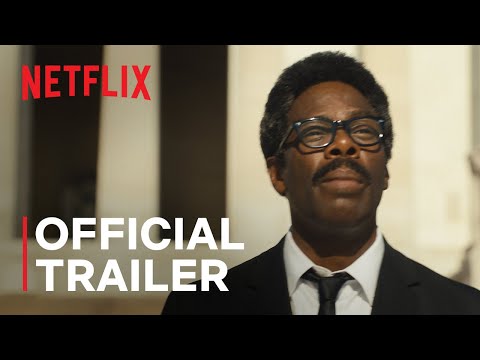
I was determined to thank Mr. Branagh and the Fates were kind. At the reception, I had the opportunity. He was standing alone, I walked over and introduced myself. I worked on a local morning news show at the time. I had a wonderful time seeing his adaptation of the Shakespeare comedy and I thanked him for casting Denzel Washington. I told him that, when I was a kid in school, seeing a reflection of myself in quality films on the big screen and TV, was most significant to me. It made my embrace of the arts wider. He beamed a warm smile and graciously replied, "That's what I was going for." He believed in the importance of racial inclusion and told me he planned to do more of that. Branagh kept his word. Critics may not have been keen on all his works but I, as an average moviegoer, will see his films because I appreciate his racial diversity and inclusion. In his works, we people of color are present. He sees us. His new film is a Hercule Poirot murder mystery I saw back in 1978 -- Agatha Christie's DEATH ON THE NILE with an all-star cast that included Bette Davis, Maggie Smith, Angela Lansbury, David Niven and Peter Ustinov. Kenneth Branagh stars in and directed a new version. Here's a trailer for the new DEATH ON THE NILE.
This post has an item that may give you a few chuckles. In the history of Old Hollywood, actress Bette Davis was fearless and peerless. Look at some of varied and memorable dramatic performances in classic films she slammed across in her film careers. Films such as 1934's OF HUMAN BONDAGE, JEZEBEL, DARK VICTORY, THE PRIVATE LIVES OF ELIZABETH AND ESSEX, THE OLD MAID, THE LETTER, ALL THIS AND HEAVEN TOO, THE LITTLE FOXES and ALL ABOUT EVE -- just to name a few.
Bette Davis loved to work. But, when she was well into middle age, she did not love having to travel way out on location to shoot.
In my first professional on-air broadcast job, I was a reporter for a popular FM rock radio station in Milwaukee. One of my earliest assignments was to get a couple of soundbites from Bette Davis. The formidable film legend was in Milwaukee to promote her new film, 1978's DEATH ON THE NILE. Promote it, she did. During her time with local press, she mentioned that the only thing she "haaaated" about making the film was having to fly out the country to do location work. She preferred being in a studio. Like in her celebrated Warner Bros. days of the 1930s and 40s. By the way, I did get DEATH ON THE NILE story soundbites from Bette Davis to air on WQFM radio when the star and I sat just about knee-to-knee for a couple of minutes.
After her big film success with the 1962 psychological thriller, WHAT EVER HAPPENED TO BABY JANE?, a movie that brought the two-time Best Actress Oscar winner her tenth and last Oscar nomination, she went on to do a lot of good work as a guest star on episodic TV. She gave strong performances in made for TV movies. We saw her in 1976's THE DISAPPEARANCE OF AIMEE co-starring Faye Dunaway as evangelist Aimee Semple McPherson. There was 1979's STRANGERS: THE STORY OF A MOTHER AND DAUGHTER co-starring Gena Rowlands. Davis played a veteran flight instructor for director Ron Howard in 1980's SKYWARD and the topic of suicide among the elderly drove 1983's RIGHT OF WAY starring Bette Davis and James Stewart. By the way, Davis won her first Oscar for DANGEROUS (1935) and her second for JEZEBEL (1938).
Reportedly, she was greatly impressed with Lucille Ball's work situation. Ball was the CBS Queen of Comedy during the 1950s and 60s. Every week, Lucy could go to work at the CBS Studios in Hollywood, finish for the day and then go home to her house in Beverly Hills. That's the kind of life Bette wanted. She wanted the luxury of going to work at a Hollywood studio and then driving home to her family. With that in mind, Bette Davis did a 1965 sitcom pilot for producer Aaron Spelling of ABC. The script was written by Mart Crowley who'd later write the highly groundbreaking and influential 1968 off-Broadway play about gay men, THE BOYS IN THE BAND.
Mary Wickes was one of the best and most beloved wisecracking character actresses in film and TV. We loved her in 1954's WHITE CHRISTMAS with Bing Crosby, we loved her as a nun in 1966's THE TROUBLE WITH ANGELS and in 1992's SISTER ACT with Whoopi Goldberg.
Wickes had snappy scenes with Bette Davis in NOW, VOYAGER (1942), THE MAN WHO CAME TO DINNER (1942) and JUNE BRIDE (1948). Mary Wickes was Bette's sidekick in the sitcom pilot. Had it sold, TV audiences would've seen Bette Davis getting laughs as an interior decorator every week on ABC. Here's that unsold 1965 Bette Davis pilot for a half-hour sitcom.
Years later, Bette Davis did appear in an ABC TV series produced by Aaron Spelling. She was in the original cast of the hit series, HOTEL. The show premiered in 1983. Davis starred as the owner of the deluxe hotel in San Francisco. Early in production, she suffered a stroke and, understandably, needed time to recuperate. She was replaced by her friend, actress Anne Baxter. Yes, the same Anne Baxter who played Eve Harrington, the backstabbing rival to Broadway star Margo Channing in 1950's ALL ABOUT EVE. Davis decided not to return to the series. HOTEL aired from 1983 to 1988.
Bette Davis waged her own personal campaign to land the coveted lead female role in the 1989 film version of DRIVING MISS DAISY. Said Richard Zanuck, the film's producer: "We received many calls from Bette Davis. Rough calls. She was very forceful on the phone." See what I mean? She was fearless and peerless.
Vittorio De Sica. What a master filmmaker that Italian director/actor was. I was introduced to his work by my parents during my youth back in South Central Los Angeles. Mom and Dad were another working class couple in the community. He was a postal clerk working at the main post office in downtown L.A. Mom was a registered nurse. They both loved films, domestic and foreign. I was a little boy in the back seat of the family car, wearing my pajamas under my street clothes, delighted by the peels of laughter from Mom and Dad one night at the drive-in movies. They were watching De Sica's YESTERDAY, TODAY AND TOMORROW. They were tickled by the reactions from Marcello Mastroianni to the private striptease being performed just for him by luscious Sophia Loren. When TWO WOMEN aired on local TV, I knew that Sophia Loren won the Best Actress Oscar for her performance as the Italian woman trying to protect her daughters from the horrors of World War 2. I knew it was directed by De Sica. I was still a kid and I knew this thanks to mentions from Mom and Dad. When I went away to college and took film courses, one film we watched and studied in class was De Sica's classic, BICYCLE THIEVES. Experiencing Vittorio De Sica films has made for some of the happiest hours of my life. Have you heard of his 1956 film, THE ROOF? The Italian title is IL TETTO.
I watched De Sica's THE ROOF last night for about the sixth time since I first discovered it back in 2014. For about the sixth time, the final scene brought a tear down my cheek. Vittorio De Sica's THE ROOF is like a warm, reassuring hug from a dear friend when you're down and out. If you love BICYCLE THIEVES, I think you'll also find a special place in your heart for THE ROOF.
We go to post-war Italy. As the opening credits in this little black and white gem roll, we see laborers at work on a construction site. New residential buildings are being constructed. Luisa (Gabriella Pallotti) has just married Natale (Giorgio Lituzzi), a tall and lean young man with a cherubic face. The couple is so poor, the two don't have their own place on the wedding night. The bride had to borrow her wedding dress. They stay with relatives, sharing the same room with relatives. Some of the only time Natale and Luisa have alone is when he's pulling their few belongings on a cart as they take to the streets in search of an inexpensive room of their own. Natale hopes to find steady employment as a bricklayer. His brother in law could teach him more about that trade.
The newlyweds and the relatives who take them in are living hardscrabble lives. We see strength in the fact that the poverty never dents, never strains the love Natale and Luisa have for each other. Together they will endure.
Natale decides to build a house for them. A little "squatter's shack" in the outskirts of town. Literally on the wrong side of the tracks. He sees that other villagers have done such. His must be erected overnight when police are not present. A law states that any building with a roof cannot be torn down. With this law in mind, hopefully with the help of relatives and villagers, Natale is determined to build a one-room home -- with a roof -- for his bride. Can he do it? If he does, will the cops tear it down as they have done others?
A little one-room building with a roof, a structure the size of a backyard playhouse for youngsters in an upscale family today, would be heaven on earth for De Sica's newlywed couple. With today's massive unemployment and millions of working class Americans teetering on the brink of eviction, perhaps now is the perfect time to appreciate this classic foreign film.
I've long cherished Vittorio De Sica films because I feel that his Italian neo-realism reflected the spirit and specialness of my South Central community. I recognized how his unprivileged characters were push aside by society because of class and income. I love how De Sica showed that ordinary people are some of the most extraordinary people you could ever hope to meet. We meet two such characters in 1956's THE ROOF. A lovely film, it runs 1 hour and 40 minutes.
De Sica's THE ROOF (IL TETTO) is streaming on Amazon Prime. If you rent it, be sure to click onto the upper right-hand corner options and get the English subtitles.
This is for you fellow classic film fans who really dig musicals. You know how sometimes, when you were having a meal at a fine restaurant, you needed a palate cleanser in between dishes? Something like a nice lemon sorbet? Well, with the pandemic and all the political news headlines last week, my spirit needed a lemon sorbet. I wanted a light, entertaining, Technicolor feature that ran under two hours. What a surprise that I found the perfect sorbet in a 20th Century Fox musical that I'd never heard of until this summer. From 1953, it's THE GIRL NEXT DOOR. Playing the title role is June Haver in her final big screen performance. She married the following year. The marriage was a long and happy one to actor Fred MacMurray. 20th Century Fox was famous for its Fox Blondes. There was singer/actress Alice Faye in the 1930s and champion ice skater Sonja Henie also in the 1930s. Betty Grable with her great gams plus her singing and dancing skills was a queen of the Fox lot through the 1940s. Then Betty's buddy, Marilyn Monroe, came in to be Fox's top blonde of the 1950s. June Haver became one of the new Fox Blondes in the 1940s. She was in the clever, patriotic time travel World War 2 musical entitled WHERE DO WE GO FROM HERE? The star was Fred MacMurray, her future hubby who possessed a good singing voice. Just like WHERE DO WE GO FROM HERE?, THE DOLLY SISTERS was a 1945 musical. A loosely based biopic, it would get one of those fabulous old movie lampoons years later when done by the company on THE CAROL BURNETT SHOW. In THE DOLLY SISTERS, Haver was teamed with Betty Grable. I watched Haver's musicals on TV. I liked her but she didn't give me that "bazazz" feeling I got from Betty. I think 1940s moviegoers felt the same way. Haver was talented and lovely but too mild for me, personality-wise. Her 1953 outing was different. Haver's final screen performance might possibly be her best. She delivers plenty of verve, along with plenty of musical numbers. I loved June Haver as THE GIRL NEXT DOOR.
The movie runs 90 breezy minutes. It's a B-musical given an A-treatment. The screenplay was written by Isobel Lennart. She wrote the screenplay for Doris Day's best film, the dramatic biopic LOVE ME OR LEAVE ME (1955), the Ingrid Bergman drama, THE INN OF THE SIXTH HAPPINESS (1958), and FUNNY GIRL (1968) starring -- of course -- Barbra Streisand.
In THE GIRL NEXT DOOR, June Haver plays Jeannie Laird. Jeannie is a Manhattan chorus girl who works her way up to swanky nightclub headliner and then wants to cut back on her work load to have a real life. She wants a home in the suburbs where she can lounge in a backyard and throw dinner parties. During her first dinner party, she meets her next door neighbor. He's a widower dad played with refreshing charm by Dan Dailey. Billy Gray plays his little boy. Gray was the boy in the sci-fi classic, THE DAY THE EARTH STOOD STILL and he won TV fame as one of the Anderson kids on the hit sitcom, FATHER KNOWS BEST. The widower dad next door is a cartoonist for a New York newspaper. His comic strip is on the verge of being syndicated. The dad, Bill Carter, and the nightclub star, Jeannie Laird, fall for each other and the little boy gets jealous. But he'll learn to love Jeannie too.
Dailey did duty as a Fox song and dance man in late 1940s musicals. Dailey starred in about three musicals with Betty Grable. They played husband and wife show biz teams and had nice chemistry. Dan Dailey, in musicals, could often overact and be too extra. Grable was keen in her ability to neutralize his hyper energy so it wouldn't eclipse her performance. Judy Garland did the same opposite Mickey Rooney at MGM. His success as a Fox song and dance man was solidified with his Best Actor Oscar nomination for 1948's WHEN MY BABY SMILES AT ME. In that, he and Grable starred as a husband and wife vaudeville team. The husband drinks too much. To some Hollywood folks, the nomination may have come as a surprise. Someone not in the Best Actor Oscar race? Humphrey Bogart for 1948's THE TREASURE OF THE SIERRA MADRE. (Laurence Olivier won for HAMLET.) Dailey dials down the overacting in THE GIRL NEXT DOOR and, in doing so, gives his character a nice warmth and depth. His more natural acting style here serves him very well. Then there's June Haver who drops the mildness of her previous films and makes Jeannie a vivacious lady whose nightclub stardom we can believe.
It's a fun little Fox musical. Haver, Dailey and Billy Gray mix well. The sidekicks are good. Dennis Day, launched from being the "boy singer" on the hugely successful Jack Benny radio show, has a supporting role. Similar to Rudy Vallee in THE PALM BEACH STORY, he's a likable nerd. The role fits him like a glove. His sweetheart, Jeannie's wisecracking best friend, is played by Cara Williams. Cara Williams was also a Fox veteran, a non-blonde, who worked up from being an extra. Did you see Gene Tierney and Clifton Webb in LAURA (1944)? When Waldo Lydecker goes to Laura Hunt's office to apologize and endorse her company's ink pen, look at the ladies at the desks behind Gene Tierney. One of them is Cara Williams. She'd get a Best Supporting Actress Oscar nomination for her dramatic role in 1958's THE DEFIANT ONES with Tony Curtis and Sidney Poitier. She'd sing and dance with James Cagney in 1959's NEVER STEAL ANYTHING SMALL.
Not that any of the many songs in THE GIRL NEXT DOOR made it to the Billboard charts, but they're all enjoyable. The movie highlights what a good dancer Haver was. (Her singing is dubbed.) Dailey is in fine dance form and Billy Gray gets a couple of numbers. The dad's cartoonist occupation serves as a gateway for two very cool animated sequences.
THE GIRL NEXT DOOR starring June Haver and Dan Dailey. Is it TOP HAT, MEET ME IN ST. LOUIS, SINGIN' IN THE RAIN or THE BAND WAGON? No. Nonetheless, it is a colorful, cute, well-produced and well-performed early 50s Fox musical.
I turned on the TV mainly for some background noise. However, I found Olivia de Havilland having a nervous breakdown on a cable channel and I was riveted. Once again. FXM Retro, the Fox classic movie channel, was airing the 1948 drama, THE SNAKE PIT. I've been staying at my sister's apartment. We have been Olivia de Havilland fans ever since we were kids watching her old movies on local TV at home in Los Angeles. THE SNAKE PIT holds a very special place in our hearts. In it, de Havilland plays a newlywed who discovers that she's in a mental institution. But she cannot recall how she got there. It's a film that led to reforms being made in conditions at mental institutions across the country. The actress allows herself to look frayed and psychologically fractured in this film. She brings you into the character's jumbled and clouded emotions while remaining fully grounded in her character's humanity. Instead of feeling that you're watching a lady go crazy, you feel "Wow, that breakdown could happen to anybody." A moving performance, it shows de Havilland at her best.
THE SNAKE PIT (1948) was made in between Olivia de Havilland's two wins in the Best Actress Oscar category. Her first was for Paramount's TO EACH HIS OWN (1946) and her second would be for Paramount's THE HEIRESS (1949).
Anatole Litvak directed THE SNAKE PIT. I've seen the movie several times. When I watched it this week on TV, something stood out to me that had not stood out to me in earlier viewings. Modern day Hollywood could have taken a tip from THE SNAKE PIT in the area of good roles for females. And I don't mean just the leading lady role played by de Havilland. Watch this social issue drama and notice the dozens of speaking parts for females. Some are supporting roles done by recognizable faces such as Celeste Holm, Beulah Bondi and Betsy Blair (who went on to give a lovely performance as the shy Clara in 1955's MARTY with Ernest Borgnine.) Many others are bit parts done by actresses you've seen in other films. Actresses who were never stars yet they were always solid, dependable performers. There are plenty of them in THE SNAKE PIT. You get a feeling that director Anatole Litvak was blessed -- all he had to do was give those pros the script, tell them what he needed, leave the rest to their inspiration, sit down and yell "Action!" Here's a trailer.
I wrote "female" because the many roles cover a wide age group. We see Virginia Cunningham (Olivia de Havilland) when she was a little girl faced with a family loss that would effect her emotionally. There's a child actress for those flashback scenes. When we get inside the institution with patients and nurses, we see women who are young like newlywed Virginia, middle-aged women and women in their senior years. THE SNAKE PIT hired dozens of talented females for on-camera duty. They weren't all stars but they sure were good. Here's a clip.
20th Century Fox's THE SNAKE PIT brought Olivia de Havilland one of her Best Actress Oscar nominations. Anatole Litvak was a nominee for Best Director and the film was in the Best Picture Oscar category. Her other nominations were in the Best Actress category for Paramount's HOLD BACK THE DAWN (1941) and in the Best Supporting Actress category for the 1939 MGM release, GONE WITH THE WIND.
He had the most enormous head I'd ever seen. In a close-up, it filled the entire screen of the Vermont Drive-In that night in Los Angeles. Maybe his head looked so enormous because his hair seemed to be a mile high. Also, the actor's intensity filled the screen. This was what I thought of Burt Lancaster as ELMER GANTRY. Lancaster's performance would bring him the Oscar for Best Actor of 1960.
Burt Lancaster was a wonderful actor who believed -- and proved -- that movies could be entertaining and address social issues at the same time. I grew up in a Black Catholic household in South Central L.A. Mom, Dad and the three of us kids in a 2-bedroom/1 bathroom house on a cul-de-sac street. I loved that modest house and I loved growing up on 124th Street and Central Avenue. For a guy whose passion for film started quite early in his elementary school years, I was lucky to have had the parents I did. They were movies fans. Not just Hollywood movies. Foreign films too. Our frequent family outings to the drive-in movies were my favorite family pastime. Often, I was too young to grasp all the mature goings on and subtext -- such as in the movies SUDDENLY LAST SUMMER, THE BEST MAN or De Sica's YESTERDAY, TODAY AND TOMORROW -- but experiencing the movie was a thrill. Sometimes, the social message did get to me. I was a Catholic schoolkid when we saw ELMER GANTRY. Even at my young age then, the message of hypocrisy and religion was not over my head.
Burt Lancaster won the Oscar for Best Actor. Shirley Jones won the Oscar for Best Supporting Actress. Moviegoers had loved her daisy-fresh image as the wholesome leading lady in musicals. She sang in OKLAHOMA! and CAROUSEL before taking on the role of the smart, spiteful hooker who has the goods on Gantry, a con artist preacher man. Jean Simmons is magnificent in the lead female role as the revivalist who acquired a huge flock of faithful Christian followers. Simmons did not get a Best Actress Oscar nomination, but she should have. (Elizabeth Taylor won for BUTTERFIELD 8.) Her performance burned itself into my memory since the first time I saw the movie. Her character is conflicted. She appears as focused in her mission as Joan of Arc. However, money and sex could cause her religious career to go up in flames.
I saw ELMER GANTRY when it made its network TV debut. I've rented it from my video store a few times. Beside the social issues, it made me aware of good screen acting and the fact that every part, a leading role or a bit part, is important.
Max Showalter also burned himself into my memory with his performance. In later years, it taught me a valuable lesson in acting. Burt Lancaster, Jean Simmons and Shirley Jones are stars you know. Max Showalter was not a star although his face was recognizable because he worked in many films and TV programs. You knew his face but you didn't know his name. If you're into classic films, he played the husband opposite Jean Peters who gets involved with the troubled married coupled played by Joseph Cotten and Marilyn Monroe in NIAGARA. He's seen as one of the singing salesman on the train in the opening number of THE MUSIC MAN.
His role in ELMER GANTRY was uncredited but that doesn't mean it was unimportant. He's in the last 15 minutes of the movie, playing a deaf man at a revival meeting. Sister Sharon (Jean Simmons) is preaching. Max Showalter has very few lines in his intense scene with Jean Simmons. It's a bit part. Nonetheless, he is fully committed to his character and totally absorbed in the script's overall story. His bit part sets up a huge, incendiary scene in that last act. If he is not totally committed as he delivers those few lines in his uncredited bit part, that key final scene would have less punch. His commitment adds muscle to the mystery of Sister Sharon.
Most of the on-camera acting I've done has been in TV commercials. I did two bit parts in episodes of THE SOPRANOS. My bit part in the Season 3 episode entitled EMPLOYEE OF THE MONTH was influenced by Max Showalter's work in ELMER GANTRY. I had only five lines. However, I was given the entire script to read. When I did, I realized what was driving the episode and the action that led up to my brief appearance. That information told me exactly how to play the character. I didn't treat the role as "only a bit part."
ELMER GANTRY, based on the novel by Sinclair Lewis, was directed by Richard Brooks. Brooks also wrote the screenplay. To me, the movie was not just entertaining. It was enlightening and educational. By the way, in that script for THE SOPRANOS, the TV reporter was written as "a young, willowy blonde." The casting director had seen me months before at another audition, remembered me, and gave me the part. She said, "Forget the description of the character. I've seen your work. I know you can do it." And I did.
I mentioned in July post ("Some Music From My Youth") that Sundays were groovy music days in our house on 124th and Central Avenue in Los Angeles when I was growing up. Especially on lazy Sunday afternoons in the summer. Mom and Dad would play a variety of albums on our stereo, mostly jazz. One of our favorite vocalists -- I picked up the love from my parents -- was Tony Bennett. We had several of his albums in our family record collection.
There was one Tony Bennett cut that always got a verbal swoon from Mom when she heard it. I always giggled when she let out that appreciative sigh. She kind of sounded like Olive Oyl in the cartoons when she saw Popeye's muscles. The Tony Bennett cut was his silky rendition of the love song written for the movie, THE SANDPIPER. The movie starred Richard Burton and Elizabeth Taylor. The song is "The Shadow of Your Smile."
"The Shadow of Your Smile" won the Oscar for Best Song of 1965. Personally, I miss the days when songwriters gave us great title tunes and love songs for the movies.
My favorite Tony Bennett album at home was "When Lights Are Low," a jazz LP he did with the Ralph Sharon Trio. Man, I still totally dig that record! I was lucky enough to meet Tony Bennett during my VH1 years. When he showed up in our studio, I wasn't scheduled to interview him but I just had to introduce myself and tell him how I much I loved his album with the Ralph Sharon Trio. His eyes lit up and he said, "Ralph!" I didn't know it but Mr. Sharon had come to the studio with Tony Bennett. He motioned Ralph Sharon over so I could shake his hand. I was giddy with glee. Then I made Tony Bennett laugh by doing a loving imitation of him in his Hollywood debut. Honestly, the movie laid such an egg that it was both his debut and his farewell film role. THE OSCAR is one of those deluxe movies that's so bad it's good. Tony played the narrator/former best friend of Frankie Fane, a vain Hollywood star who used everybody he came in touch with so he could win an Oscar. Tony Bennett was Hymie Kelly, the character in that cheese-fest who said "Man, he wanted to swallow Hollywood like a cat with a canary. And he did it!"
"I've Got Just About Everything" is a swingin' cut from the Tony Bennett LP with Ralph Sharon. Treat your ears. Click onto this link: